
Blog
Blog
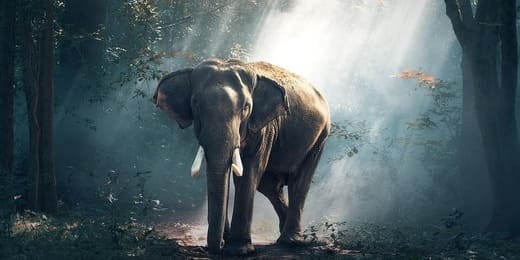
Animal reincarnation: find your lost companion
Have you ever felt that your new pet shares the same spirit as the one that passed away? Animal reincarnation is a fascinating concept that is generating increasing curiosity, especially among those who have experienced deep connections with their four-legged companions. This phenomenon interests not only animal lovers, but also those who question spirituality and the continuity of the soul after death .
What is animal reincarnation?
Animal reincarnation refers to the idea that the soul of an animal can be reborn in a new body, usually of the same type. This means that after an animal's death, its soul might choose to return in the form of another animal to reunite with its former owners or continue its life's purpose . This concept is based on the belief in an eternal spiritual energy that flows through all forms of life.
In some cultures and belief systems, reincarnation is not only conceivable for humans, but also applicable to pets . From ancient legends to modern beliefs, this concept holds a special place in the hearts of many animal lovers. The idea often brings comfort and hope to those grieving the loss of a beloved pet, whether furry, feathered, or scaly.
Cultural beliefs surrounding animal reincarnation
Many cultures around the world incorporate reincarnation into their worldview. In Hinduism and Buddhism, for example, all living beings participate in the cycle of rebirth called Samsara . Here, each life is a step toward eventual enlightenment, regardless of the body: human or animal. Thus, the souls of animals can follow a similar path, evolving from one existence to another according to their accumulated karma .
In Australian Aboriginal and Native American cultures, animal communication with the spirit world is an integral part of spiritual narratives. These traditions tell of how animals can bring messages or return symbolically to help those they have left behind. The spiritual energy of these creatures is often perceived as protective and guiding.
Possible signs of reincarnation in your pet
While the idea may seem esoteric to some, many pet owners report having unsettling experiences suggesting the return of their deceased animal . Numerous accounts exist of new pets exhibiting behaviors, habits, or physical traits similar to those of their lost companions.
Unexpected and familiar behaviors
One of the often-cited signs is unusual behavior similar to that of the deceased pet. Some animals seem to recognize objects or places that were important to their former companion. Sometimes, a dog or cat will exhibit surprising food preferences that exactly match those of the lost pet.
Another reported sign is the sudden reappearance of specific habits that had characterized the relationship with the previous pet. Whether it's a puppy that immediately knows where its favorite ball is or a kitten that comes running as soon as you whistle a specific tune, these moments reinforce the idea for some of a possible return of the spirit of their old friend.
The role of animal communication
Animal communication , a discipline that allows for telepathic or intuitive contact with animals, is often mentioned when discussing animal reincarnation. Some people who have lost a pet seek to establish a connection with the afterlife through animal communicators.
These individuals claim to be able to perceive the spiritual energy of animals and sometimes even identify if a reincarnation has occurred. Through this connection, they transmit messages supposedly from the afterlife, offering comfort and guidance to their human clients seeking answers. Although controversial, animal communication is taken very seriously by many people who feel a deep emotional bond with their animals.
Is it truly possible to communicate with the souls of animals?
It largely depends on personal beliefs. For those open to this practice, animal communication represents a reassuring opportunity to maintain a connection despite the physical distance caused by death. Others remain skeptical, considering this interaction to be more about psychological mechanisms related to coping with grief than a genuine spiritual connection.
Nevertheless, interest in this subject continues to grow, partly thanks to the many successful anecdotal accounts, thus strengthening the conviction of those who seek to confirm the reincarnation of their beloved companion.
Captivating accounts of reincarnation
Touching and inexplicable stories about animal reincarnation circulate widely. These accounts often reveal emotionally charged situations, corroborated by elements that are difficult to explain other than through an intuitive perception of the rebirth of the animal soul .
Heartwarming stories return
It's not uncommon to hear of dogs or cats adopted from shelters showing an immediate bond with grieving families. These newcomers then display such strong signs of gratitude that they give the impression of having deliberately chosen to return to where their love was genuine and reciprocated.
Some animals, rescued under extraordinary circumstances, exhibit a striking resemblance in both their appearance and their previous lifespan. Experts and enthusiasts agree that these coincidences cannot be purely accidental.
The animal's life mission after reincarnation
From this perspective, each reincarnation would then represent the continuation of an animal life mission . Far from being limited to the simple pleasure of existing alongside their owner, our furry friends would seem to play a specific role in the accomplishment of common objectives affecting both their own evolution and that of their human companions.
A special relationship between a human and their pet can significantly influence each other's lives. A dog providing moral support or a perceptive cat helping to recognize invisible danger are just a few examples where discreet yet impactful actions illustrate the unique collaboration formed between two beings united far beyond simple daily gestures.
Sacred complementarities between man and animal
Behind this magical connection often lies a mutual understanding based on a shared spiritual energy . Each encounter is then perceived as a precious opportunity to learn, heal, or evolve together over the years spent side by side.
While on the surface everything seems to be a normal interaction between a loving master and his faithful companion, the invisible commitments traced through reincarnations cheerfully transgress this ephemeral material dimension to deeply touch the very essence of our humanity joined with animal souls.
Personal growth enriched by the attentive presence of a curious cat.
Emotional stability drawn from the empathetic games of a funny and persistent dog.
Creative development inspired by the contemplative observation of majestic birds.
Why believe in animal reincarnation?
Adopting this perspective often leads to a noticeable increase in one's own sense of universal unconditional love , transforming limiting judgment and complex doubts into serene acceptances imbued with gratitude for the complex beauty of interspecies existence.
Positive effects of such a belief
This emerging faith in a reassuring past continuity between oneself and various creatures who came to share precious moments frequently leads to lasting inner peace, perfectly accompanying the natural process required to accept that the precious fragments lived together will always deserve an active present vibration.
Finally, benefiting from a comprehensive approach linked to a dynamic of spiritual loyalty often works the miracle of a renewed hope animated directly by a heart enamored with happiness, thus transforming daily reality and ultimately establishing a subtle, beneficial, omnipresent difference.
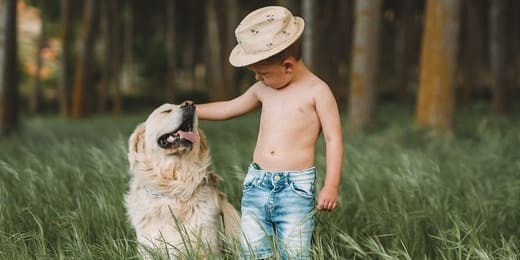
Understanding Animal Communication: Techniques and Benefits
Animal communication: between signals, survival and ethology
Does animal communication seem like a mystery to you, despite your cat's obvious emotions or the cryptic language of birds? Why do certain signals, like alarm calls or whale songs, shaped by evolution, govern the survival and social relationships of species? This guide explores the scientific mechanisms, from the evolution of sensory signals to animal dialects, while revealing how a calm energy and an open heart can amplify your connection. Discover the secrets of elephant infrasound, the adaptive syntax of bats, and how these exchanges unveil the complexity of life , without, however, matching the richness of human syntax.
What is animal communication? A scientific definition
The essential functions of animal communication
Fascinating examples of communication across species
Animal communication and human language: what distinguishes us
What is animal communication? A scientific definition
Defining animal communication: an exchange of information through signals
Animal communication refers to the exchange of information between individuals via specific signals. According to ethologists, these signals (visual, auditory, chemical, etc.) have been shaped by evolution to influence the behavior of the receiver and improve the survival or reproduction of the sender. Example: birdsong conveys information about mate quality or territorial defense. This phenomenon contrasts with unintentional cues , such as the noise of a mouse attracting a predator without any communicative purpose.
Another example is the bioluminescence of fireflies, used to attract a mate or trap prey. These signals, studied in ethology, show how species have developed strategies adapted to their environment .
To learn more about this scientific definition, see the Universalis article .
The fundamental role of communication: survival and social organization Survival often depends on critical signals , such as the alarm calls of vervet monkeys that warn of danger. In reproduction, the courtship displays of birds of paradise or the pheromones of butterflies guide mate choice.
Social organization also relies on these exchanges : ants use chemical trails to guide their colony to food. In baboons, vocalizations establish a hierarchy of dominance interactions, influencing access to resources and reproduction.
Tactile signals, such as grooming in primates, strengthen social bonds and reduce stress . Furthermore, snakes detect the body heat of their prey via infrared receptors, illustrating the adaptation of thermal signals.
These mechanisms, studied in ethology, show how communication shapes the adaptation of species to their environment.
The different modes of communication in the animal kingdom
The four main types of sensory signals
Comparison of the main animal communication channels
Signal type
Description
Benefits
Disadvantages
Concrete examples
Visual
Movements, postures, colors
Fast, directive
Requires light, range limited by obstacles
The dance of the bees, the plumage of the peacock, the bristling of a wolf's fur
Auditory
Sounds, songs, cries
Long range, works in zero visibility
May attract predators; location sometimes difficult
Song of the whales, alarm call of the marmots, song of the birds
Chemical/Olfactory
Pheromones, urine marking
Durable, works over long distances Slow, not very directive
Cat territorial marking, ant pheromone trail
Touchscreen
Physical contact, grooming, vibrations
Intimate, clear and private message
Very short range
Grooming among monkeys, rubbing between elephants
Animal communication uses sensory signals tailored to the needs of each species. Visual signals, such as the dance of bees or the plumage of peacocks, are effective in well-lit environments but limited by obstacles . In cephalopods, the rapid color changes of the octopus communicate threats or attract a mate. Auditory signals, such as the ultrasonic sounds of bats for echolocation or the infrasound of elephants for long-distance communication, penetrate obstacles but risk alerting predators . Chemical signals, such as the alarm pheromones of ants or the urine marking of felines, persist over time but spread slowly . Tactile signals, such as mutual grooming in primates or the trunk taps of elephants, require physical contact but strengthen social bonds . Each type of signal is adapted to specific contexts, with frequent combinations used to maximize effectiveness . A dominant wolf can thus raise its fur (visual signal), growl (auditory signal), and mark its territory (chemical signal) to assert its status, illustrating the complementarity of sensory channels . This diversity reflects evolutionary adaptations to ecological and social constraints, optimizing the transmission of information critical for survival or reproduction.
The essential functions of animal communication
Animal communication systems are the product of millennia of evolution, shaped by selective pressure to optimize survival and reproduction. These signals, whether visual, auditory, or chemical , constitute tools for social coordination and adaptive response to environmental challenges.
Communicating is essential for living, reproducing, and cooperating.
Animal communication fulfills fundamental biological needs . In particular, it allows:
Informing about one's internal state: The alarm calls of vervet monkeys, distinguishing between terrestrial (leopards), aerial (eagles), or crawling (snakes) predators, trigger appropriate defensive behaviors . In mice, five distinct facial expressions signal pain.
Identifying individuals : The distinctive songs of humpback whales allow for recognition between individuals. Ants use unique pheromones to identify members of their colony.
Managing social interactions : Ritualized pecking by birds indicates hierarchy within groups. Mutual grooming among primates strengthens social bonds and reduces conflict.
Coordinating group actions : The waggle dance of bees precisely conveys the direction and distance of a food source. Ants build chemical trails to guide their fellow ants to resources.
Alerting to danger : Prairie dogs emit distinct calls describing the size, speed, and nature of the predator. Catfish release alarm pheromones (shreckstoff) when injured.
Attracting a mate and reproducing : The courtship displays of birds of paradise combine vibrant colors and choreographed movements. Squid change their skin patterns in real time to attract a mate.
These behaviors, observed from ants to cetaceans, show how each signal evolves to maximize reproductive success and survival. Ethological studies reveal that species living in structured groups often develop more complex communication systems , reflecting the importance of cooperation in species evolution.
Fascinating examples of communication across species Animal communication reveals astonishing strategies, tailored to the needs of each species . Some species have mastered signaling systems so advanced that they rival human linguistic abilities. Discover spectacular examples, supported by scientific research.
Communication virtuosos: birds, cetaceans and bats
Songbirds use complex vocal structures, with organized notes and syllables. Their brains undergo seasonal neuroplasticity : the HVC nucleus, involved in singing, doubles in size in the spring, facilitating vocal learning.
Cetaceans, such as humpback whales, produce evolving songs . Males modify their melodies annually, which are then passed down between populations. Dolphins use unique whistles to identify themselves individually, which are key to social coordination. Bats, such as Saccopteryx bilineata , exhibit an early capacity for vocal learning . Young bats go through a babbling phase, comparable to that of humans, before mastering their repertoire. This flexibility adapts to social contexts such as competition or reproduction.
Elephants : Communicate via infrasound (5 to 30 Hz), inaudible to humans. Each female has a unique vocal signature, important for reuniting dispersed groups.
Humpback whales: Males sing complex melodies , modified annually, sometimes adopted by other groups. These songs can be heard over kilometers, aiding migratory coordination.
Bats: Adapt the syntax of their songs in milliseconds, depending on the message (courtship display or territoriality). This flexibility gives them a reproductive advantage .
These examples illustrate the role of vocal plasticity in adapting to the social context, as shown by research on mammals and birds (source) .
Primate messages and new research avenues
Non-human primates, such as mandrills, use referential calls (for example, a specific call to signal an aerial predator). However, analyzing these signals remains limited without advanced tools. These vocalizations convey precise information about threats.
Artificial intelligence is opening up unprecedented possibilities. A project funded by the French National Research Agency (ANR) is exploring the facial expressions of mandrills using AI. This technology makes it possible to decode subtle signals , revealing previously unknown emotions or intentions. These advances are transforming ethology by deciphering complex interactions. They highlight that animal communication, although different from our own, relies on sophisticated strategies adapted to their environment and social needs.
Animal communication and human language: what distinguishes us
They have some similarities, but one fundamental difference: the syntax.
Animal communication systems share similarities with human language , particularly in the use of symbolic signals. For example, the dance of bees conveys geographical information about food sources, while vervet monkeys use distinct calls to warn of aerial or terrestrial danger, triggering appropriate responses. However, a crucial difference remains: complex syntax. As the Collège de France points out, only humans have mastered the art of combining lexical units according to grammatical rules to generate an infinite number of new meanings. This recursive ability, absent in animals , allows them to structure sentences with a syntactic hierarchy, a skill not observed in primates despite their vocal mimicry abilities.
What studying animals teaches us about ourselves
A comparative analysis between animal communication and human language sheds light on the evolution of our linguistic abilities. Here are the key distinctions :
Animal communication: Uses innate or socially learned signals, referencing objects or present states (danger, food). Example: dialects in songbirds, transmitted culturally.
Human language: It relies on a complex syntax (grammar) to create novel meanings. This combinatorial structure allows for infinite productivity through recursion , as highlighted by research on the biological foundations of language.
Key difference : Human language evokes the past, the future, abstract concepts or hypotheses, unlike animal systems limited to the present and the concrete.
These discoveries, stemming from research on neural mechanisms, reveal that our uniqueness lies in a recursive syntax , described as the "language faculty in the narrow sense" by Hauser, Chomsky, and Fitch. This advance sheds light on the emergence of our linguistic cognition, which transcends immediate needs to explore the complexity of meaning.
Animal communication is based on serenity, open-mindedness, and belief in this ability. By avoiding emotional projections and expectations, a calm energy fosters an empathic connection . Combining science and intuition, it reveals the richness of life , each being expressing its uniqueness in a silent yet profound dialogue.
Leopard or cheetah: how to easily tell the difference?
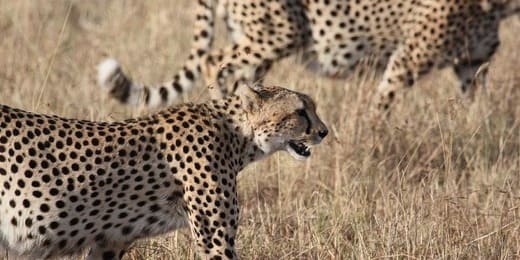
The main difference between a leopard and a cheetah lies in their morphology, behavior, and spots. The cheetah is built for speed with a lean, slender body, while the leopard is more muscular and climbs trees easily. Their coat patterns are also distinct: the cheetah has solid spots, while the leopard has rosettes.
What is a leopard?
The leopard ( Panthera pardus ) is a large feline known for its strength, agility, and ability to climb trees. Its coat is covered in irregular rosettes (open circles), perfect for camouflage in the forests and savannas of Africa and Asia. An opportunistic hunter, the leopard is extremely adaptable and solitary.
What is a cheetah?
The cheetah ( Acinonyx jubatus ) is famous for being the fastest land animal, reaching speeds of 110 km/h. Its body is slender and light, with long legs and a very flexible spine. Unlike other felines, the cheetah has semi-retractable claws for better grip while running. Its spots are small, round, and black, evenly distributed across its golden coat.
Comparative table: leopard vs cheetah
Criteria
Leopard
Cheetah
Type of stains
open rosettes
Solid round spots
Body
Muscular, compact
Slender, elegant
Maximum speed
58 km/h
110 km/h
Habitat
Forests, savannas, mountains
Open Savannas
Behavior
Solitary climber
Daytime hunter, land-based
How can you tell a leopard from a cheetah at a glance?
Face: The cheetah has characteristic "black lines" (tear marks) running from its eyes to its mouth. The leopard does not.
Body: The cheetah is slimmer, with long legs.
Coat: The leopard's rosettes are open; the cheetah's spots are solid.
Behavior: The leopard often climbs trees with its prey, which the cheetah does not do.
Symbolism of the leopard and the cheetah
The leopard is often seen as a symbol of quiet strength, adaptability, and strategy. The cheetah, on the other hand, embodies speed, efficiency, focus, and precision. As a totem animal, the leopard encourages patience before action, while the cheetah urges you to seize the opportunity at the perfect moment.
Frequently Asked Questions (FAQ)
Which is stronger, the leopard or the cheetah?
The leopard is physically stronger thanks to its musculature, while the cheetah specializes in speed and agility.
Why is the cheetah the fastest?
The cheetah's body is perfectly designed for speed: flexible muscles, elastic spine, semi-retractable claws and wide nostrils for oxygenation.
Does the cheetah climb trees like the leopard?
No, the cheetah rarely climbs trees. It mainly stays on the ground, while the leopard is an excellent climber.
Where can you find cheetahs and leopards?
Both species live primarily in Africa, but the leopard is also found in Asia. The cheetah prefers open savannas, while the leopard adapts to a variety of environments.

Crow or raven: how to easily tell them apart?
The main difference between a raven and a crow lies in their size and calls. The raven is generally larger, with a more massive beak, and produces a deeper, hoarse call. The crow is smaller, more slender, and its calls are higher-pitched. Both belong to the corvid family and exhibit remarkable intelligence.
What is a crow?
The raven is a large, black bird, often considered one of the most intelligent in the animal kingdom. Its plumage is entirely black, shining brightly in the light. Ravens live in wild areas such as forests, mountains, or remote countryside. The common raven ( Corvus corax ) is the most well-known species in Europe and North America.
What is a crow?
The carrion crow closely resembles the raven, but it is smaller and more slender. Its beak is thinner and its call is higher-pitched. Highly adaptable, the carrion crow frequently lives in urban areas and open countryside. In France, the carrion crow ( Corvus corone ) is the most common.
How to quickly distinguish a raven from a crow?
Criteria
Crow
Crow
Size
Larger (up to 70 cm)
Smaller (45 to 50 cm)
Beak
Massive and powerful
Thinner and straighter
Cry
Deep, hoarse
High-pitched, clear
Preferred habitat
Forests, mountains
Cities, countryside
Example of a species
Common raven
Carrion crow
Symbolism of the raven and the crow
The raven is often seen as a messenger between the world of the living and the world of spirits. It symbolizes transformation, profound intelligence, and rebirth. The crow, on the other hand, represents communication, cunning, and adaptability.
Discover our Raven and Crow totem jewelry to honor their wisdom and protective power.
Frequently Asked Questions (FAQ)
How can you tell the difference between a raven and a crow in flight?
In flight, the raven has a more stocky build and a diamond-shaped tail. The crow is more slender and its tail is straighter, fan-shaped.
What is the totem animal of the raven?
The raven, as a totem animal, is linked to magic, inner transformation, and access to hidden truths.
Why are crows associated with death?
In many cultures, the raven is seen as a spiritual guide linked to the cycle of life and death, not as a negative sign, but as a messenger of transformation.
Can crows and ravens talk?
Yes, some species of corvids can mimic the human voice and other sounds. They are considered among the most gifted birds for communication.

Crocodile or alligator: how to easily tell them apart?
What is the difference between a crocodile and an alligator?
The main difference between a crocodile and an alligator lies in the shape of their snouts, their habitat, and their behavior. The alligator has a broad, rounded snout, while the crocodile has a narrower, V-shaped snout. Furthermore, crocodiles tolerate salt water better than alligators.
What is a crocodile?
The crocodile belongs to the Crocodylidae family. It is distinguished by its V-shaped, pointed snout and its teeth, which are visible even when its mouth is closed. Crocodiles live in tropical regions of Africa, Asia, the Americas, and Australia, often in saltwater or brackish water. They are powerful predators, capable of living in both fresh and saltwater.
What is an alligator?
The alligator, belonging to the Alligatoridae family, has a wider, more rounded, U-shaped snout. When its mouth is closed, only its upper teeth are visible. Alligators live mainly in freshwater in the southeastern United States (Florida, Louisiana) and in China. They are generally more docile than crocodiles.
Comparative table: crocodile vs. alligator
Criterion
Crocodile
Alligator
Shape of the muzzle
Tapered, V-shaped
Large, U-shaped
Habitat
Saltwater or freshwater
Primarily freshwater
Visible teeth with mouth closed.
Yes
No (only the upper teeth)
Behavior
More aggressive
More docile (relatively)
Localization
Africa, Asia, Americas, Australia
United States (Florida), China
How to quickly tell the difference between a crocodile and an alligator?
Snout: Wide and rounded = alligator; narrow and pointed = crocodile.
Teeth Check: Crocodile: teeth visible even when mouth is closed; Alligator: lower teeth hidden.
Habitat: Freshwater? More likely an alligator. Brackish or saltwater? More likely a crocodile.
Symbolism of the crocodile and the alligator
In many cultures, the crocodile symbolizes raw power, patience, and mastery of primal instincts. The alligator, more closely associated with freshwater and fertility, represents protection, hidden wisdom, and inner strength. As totem animals, both teach the importance of acting at the right moment and conserving energy for decisive actions.
Frequently Asked Questions (FAQ)
Which is more dangerous: a crocodile or an alligator?
The crocodile is generally more aggressive and dangerous to humans than the alligator, which is more timid and prefers to flee from humans.
Can a crocodile live in fresh water?
Yes, some crocodiles live in freshwater, but they also tolerate saltwater very well, unlike alligators.
How to tell the difference between a crocodile and an alligator by observing their teeth?
In a crocodile, both the upper and lower teeth are visible when the mouth is closed, whereas in an alligator, only the upper teeth are visible.
Where can you find alligators outside of the United States?
Another species of alligator can be found in China, but it is much rarer than its American cousin.

Differences between an owl and a barn owl: how to tell them apart?
The main difference between an owl and a barn owl lies in the presence of ear tufts. Owls have small tufts of feathers on their heads called ear tufts, while barn owls do not. Both are nocturnal birds of prey, but they are distinguished by their appearance and certain habits.
What is an owl?
The owl is a nocturnal bird of prey known for its disc-shaped face and large, forward-facing eyes. Unlike barn owls, the owl does not have ear tufts. It is often associated with wisdom and mystery in many cultures. Famous species include the barn owl and the tawny owl.
What is an owl?
The owl is also a nocturnal bird of prey, but it is distinguished by its prominent ear tufts. These erect feathers are not ears, but they contribute to its camouflage and communication. The Eurasian eagle-owl is one of the most iconic owls.
How to quickly distinguish an owl from a barn owl?
Criteria
Owl
Owl
Egrets on the head
No
Yes
Main activity
Night
Night
Midsized
Smaller
Larger in general
Examples of species
Barn owl, tawny owl
European Grand Duke
Symbolism of the owl and the barn owl
The owl is often seen as a symbol of wisdom, intuition, and mystery. It is associated with the ability to see beyond appearances. The barn owl, meanwhile, is considered a spiritual protector, a guide capable of revealing hidden truths and protecting against negative energies.
Owl necklace available in our Fauna collection
Discover our owl-inspired jewelry to connect with their spiritual energy and wear their messages every day.
Frequently Asked Questions
Do owls see better than barn owls?
Owls and barn owls both possess exceptional night vision, adapted for hunting at night. There is no significant superiority between the two.
Do all owls hoot?
Most owls hoot, but some also emit whistles or cries. Each species has its own vocal repertoire.
Is it possible to have an owl as a pet?
In many countries, it is illegal or heavily regulated to own an owl as a pet because of their need for a natural environment and their protected status.
Which is rarer: owl or barn owl?
Rarity depends on the species and the region. Some species of owls are considered threatened or endangered.

Animal Numerology: Discover Your Pet's Destiny
Animal Numerology: Discover Your Pet’s Destiny and Spiritual Path
Have you ever wondered if numbers could unlock the deepest secrets of your pets? Animal numerology offers a symbolic and spiritual interpretation of your pet’s life path based on their name and birthdate. Explore a sensitive and intuitive approach to better understand the soul and emotional needs of your loyal companion.
What Is Animal Numerology?
Animal numerology is a gentle, intuitive method connecting numbers to the unique energy of every living being. Inspired by traditional numerology, it allows you to create a detailed spiritual profile of your pet through a destiny number, revealing their personality traits, emotional drives, and even unconscious desires.
How to Calculate Your Pet’s Destiny Number?
Calculating your pet’s destiny number involves two simple steps: using the name of your pet and their birthdate. Each letter is assigned a number (A=1, B=2… up to I=9, then J=1, K=2, etc.). Add the numerical values of each letter, and then reduce the total to a single digit between 1 and 9. Repeat the process with the birthdate. This unique number represents your pet’s spiritual vibration.
Example: For a cat named “Luna”, L(3) + U(3) + N(5) + A(1) = 12 → 1 + 2 = 3. A destiny number of 3 reveals a joyful, sociable, and curious nature.
Meaning of Destiny Numbers in Animal Numerology
Here’s what each destiny number says about your pet’s spiritual energy and personality:
1: Leader, independent, courageous.
2: Loving, sensitive, seeks emotional harmony.
3: Playful, expressive, highly communicative.
4: Loyal, reliable, thrives on routine.
5: Adventurous, curious, needs mental stimulation.
6: Protective, nurturing, strongly connected to family.
7: Introspective, calm, spiritually intuitive.
8: Powerful, ambitious, structured and goal-oriented.
9: Altruistic, generous, deeply empathetic.
Karmic Numerology for Pets: Exploring Past Life Energies
Sometimes your pet’s behavior may feel mysterious or deeply instinctive. Karmic animal numerology helps uncover influences from past lives or ancestral memories. This deeper analysis can reveal hidden emotional wounds, innate talents, and unconscious fears, providing valuable insights to support your pet’s emotional and spiritual growth.
Creating a Harmonious Environment Based on Destiny Numbers
Knowing your pet’s spiritual destiny number can help you design a living environment that aligns with their energy. A dog with a number 4 will feel safe with predictable routines, while a cat with a number 5 will thrive with interactive toys and new experiences. Tailoring their surroundings can significantly boost their emotional well-being.
Deepen Your Bond Through Animal Numerology
Animal numerology is more than a spiritual tool—it’s a bridge between you and your animal companion. Understanding their soul mission, emotional needs, and natural instincts enables you to interact with greater empathy and respect. A deeper, spiritual connection can then flourish, grounded in unconditional love and mutual understanding.
Real-Life Examples and Practical Tips
Imagine a parrot with destiny number 3: playful, talkative, and highly social. Provide engaging toys and lots of conversation. Or a horse with destiny number 9: a deeply empathetic soul who thrives in a loving, supportive environment. Small, thoughtful actions based on pet numerology can transform your daily relationship.
Conclusion: A New Way to Understand and Love Your Pet
Animal numerology opens a new, spiritual perspective on the inner lives of our pets. It invites us to listen beyond the obvious, to see them as soulful beings with emotional missions. By applying these insights, we can build stronger, conscious relationships filled with love, energy, and purpose. Try animal numerology with your pet—you might be amazed at the secrets they reveal through numbers.
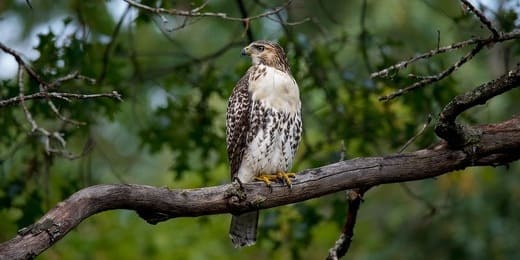
March totem animal: discover your spirit guide
Choosing a spirit animal is an ancient tradition rooted in various cultures around the world, particularly among Native American peoples. In March, spring returns, bringing with it opportunities for transformation and renewal. But which animal can serve as a guide during this month of change? Let's explore the spirit animals associated with this time of year.
The importance of totem animals in shamanism
The concept of a totem animal holds a central place in shamanism and in some Native American spiritual traditions. A totem animal represents not only a spirit guide but also a manifestation of the intrinsic traits of the person or period it influences. These animals often symbolize characteristics that one seeks to develop or overcome.
For many, recognizing and understanding their spirit animal can be a valuable source of guidance and support. It allows for greater self-understanding and strengthens their connection with the natural world. Spirit animals accompany us throughout our lives or during specific periods, such as the month of March.
Totem animals and their cultural role
Totem animals are not simply symbols; they have been used for centuries to teach important lessons and guide personal and community decisions. In many Native American cultures, each animal possesses unique wisdom passed down through generations. For example, the falcon , with its keen vision and ability to see beyond the horizon, is often associated with those who seek to foresee the future in complex situations.
By connecting with your spirit animal , you embrace particular traits that can enhance your skills and enrich your life experience. Whether you seek courage, patience, or passion, there is a spirit animal ready to guide you.
Totem animals for the month of March
In the context of March, certain totem animals seem particularly relevant. This month symbolizes a transition between winter and spring, marking an auspicious time for renewal and growth. The winds of change are blowing strongly, awakening new possibilities.
The falcon: foresight and clarity
The falcon is one of the most powerful totem animals associated with March. With keen eyesight and majestic flight, this bird symbolizes insight and the ability to see beyond immediate appearances. For those born in March, or for anyone seeking to harness the energies of this month, the falcon offers a fresh perspective.
Guided by this animal, we learn to anticipate the necessary steps to move forward in our lives. It is a valuable ally for strategic decision-making and deep reflection. The falcon inspires us to seek hidden truths and clarify thoughts clouded by uncertainty.
The wolf: intuition and loyalty
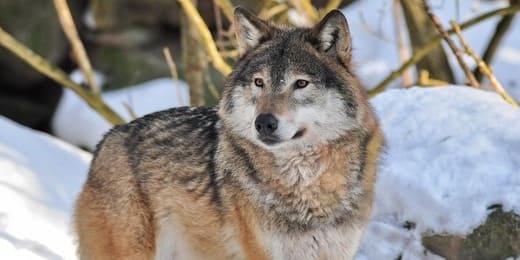
Another relevant totem animal in March is the wolf , a symbol of intuition and loyalty to its pack. Responsible and alert, it embodies the ability to trust one's instincts. The wolf's influence during March encourages exploring the unknown while remaining true to one's core values.
Its presence in a life underscores the importance of a close-knit and harmonious community. Those seeking their personal or professional path can draw inspiration from the wolf to uncover the unsuspected resources that lie dormant within them. It also encourages us to remain vigilant in the face of unforeseen challenges.
The ram: strength and determination
Known for its unwavering determination and brute strength, the ram is another totem animal closely linked to the month of March. As spring begins to make its appearance, the ram reminds us of the importance of pursuing our goals with fervor and tenacity.
Those under the influence of this animal often experience a surge of energy and a burning desire for conquest. The ram encourages one to overcome obstacles on the path to personal fulfillment. With it, one learns to value persistence and resilience, while also recognizing the balance necessary to avoid excess.
Fish: fluidity and creativity
Symbolizing adaptability and a boundless imagination, fish play a vital role for those born during this period. As March evolves into a season synonymous with blossoming, these aquatic creatures inspire us to go with the flow while embracing change.
Flexible and intuitive, Pisces encourages us to unleash our creativity to find innovative solutions to the difficulties we encounter. Listening to their whispers helps us to refocus and navigate skillfully through the turbulent waters of relationships or changing circumstances.
Choose your spirit animal according to your date of birth
While certain animals are specifically associated with the month of March, identifying the one that truly resonates with your essence depends on many factors, including your birth date . Since each astrological sign offers a different orientation, it's interesting to examine how totem animals complement this unique cosmic dimension.
Sometimes, consulting an expert in esoteric arts or shamanism can be helpful for a more personalized reading. However, listening to your intuition remains a reliable method for connecting deeply with the mystical beings that populate our existence.
Astrological sign and totem animal
Traditionally, certain compatibilities emerge between Western zodiac signs and totem animals . For example, an Aries native might naturally be attracted to the ram or even the falcon , while those of the Pisces sign would find their mirror by exploring the vibrant realities associated with fish or any form of aquatic life.
However, it is essential to note that no strict rules truly govern possible connections. Personal experience often prevails, sometimes revealing unexpected affinities with animal species that seemed unrelated to standard astrology.
Connecting with your spirit animal
In any journey of self-discovery or self-discovery, it's always best to approach each experience with an open mind. Practicing meditation, observing nature, or even keeping a daily journal are all effective ways to strengthen your close connection with your spirit animal guide.
Whether you choose to delve deeply into shamanic traditions or simply follow your primal instincts, know that embracing your animal people leads to a fascinating adventure filled with invaluable lessons. Claim their ancestral wisdom and fully benefit today from the comfort offered by these extraordinary beings!
February totem animal: spiritual and symbolic guide
February is a special month, marked by the astrological signs of Aquarius and Pisces . For many, it's also a time for introspection and renewal. In this article, we'll explore which spirit animal corresponds to this month and how it can influence your life. The concept of a spirit animal has its roots in shamanism and offers a unique way to understand our connection with the nature that surrounds us.
Understanding the concept of a totem animal
The term totem animal originates from shamanic traditions where these animals are seen as guides or spirit protectors. Each individual may have several totem animals throughout their life, but these can also vary depending on the lunar phases or the months of the year. The characteristics of these animals often reflect personality traits or the challenges one faces.
The totem animal essentially serves as a mirror for our inner behaviors and attitudes. The presence of a totem animal in your life can help you discover your hidden strengths, develop your natural talents, and even overcome certain adversities. In February, two animals stand out in particular for their special connection with this period: the otter and the wolf .
The significance of the otter as a totem animal
The otter is often associated with the month of February because of its ingenuity and adaptability . These creatures are known for their ability to adapt to different aquatic and terrestrial environments, making them a symbol of the perfect balance between fun and responsibility. Those who feel a connection with the otter may benefit from its cheerful and curious approach to life.
This adaptability and ingenuity demonstrate great inner strength. By observing how the otter interacts with its environment, you can learn to approach your own challenges with greater flexibility and creativity. Thus, as your spirit animal for February, the otter can inspire you to explore new territories and embrace change with enthusiasm.
Exploring the symbolism of the wolf as a totem animal
On the other hand, the wolf is also considered a powerful totem animal for the month of February. Linked to both the moon and the mysterious energy of the night, the wolf embodies inner wisdom, loyalty, and determination. If you were born at the end of February under the sign of Pisces or just after Aquarius, the wolf could very well be your spirit guide.
Wolves often travel in packs, which emphasizes family and community bonds. Because of this social dynamic, individuals who associate the wolf with their birthdate may feel a strong need for genuine connections and often find comfort in cooperating with others. The wolf encourages not only productive solitude but also harmonious collaboration.
The astrological influences of February
The signs of Aquarius and Pisces mark the month of February, and each brings with it distinctive attributes that can be complemented by their respective totem animal. Aquarius, with its visionary and avant-garde spirit, resonates well with the otter, which embodies innovation and adaptability. As for Pisces, they share with the wolf a deep intuition and an innate sense of community.
People born under the sign of Aquarius are generally known for their individuality and radically innovative tendencies. The otter, as a totem animal , accentuates this tendency by encouraging the search for new ideas and solutions. The otter's natural ingenuity beautifully complements the revolutionary spirit typical of Aquarians.
Pisces traits and connection to the wolf
For those born under the sign of Pisces , the wolf represents invaluable guidance in their quest for emotional balance and spiritual understanding. Pisces are dreamers with keen intuition. With the wolf as their totem animal, these qualities can be harnessed to enhance their natural leadership, enabling a perfect symbiosis between the intuitive and rational worlds.
The wolf also helps those who tend to be too solitary to find their place within a social structure by cultivating trust and integrity. By drawing inspiration from how wolves communicate and collaborate within their pack, Pisces can enrich their relationships and develop a better understanding of human dynamics.
How to identify your spirit animal
Generally speaking, the process of determining your spirit animal often relies on a blend of personal intuition and objective observations. It's crucial to pay attention to the animals that regularly interact with you or frequently appear in your thoughts or dreams. This can include chance encounters, appearances in visual media, or recurring dreams.
Seeking guidance from an experienced shamanic practitioner can be a catalyst for your spiritual exploration. These experts can accompany you through guided sessions to help you connect more deeply with your subconscious and rediscover your totem animal, which is waiting to reveal its secrets. Most importantly, embody the positive traits your totem animal chooses to share with you.
Spiritual practices to connect with your totem animal
Once identified, integrating your spirit animal into your daily life requires a certain amount of discipline and open-mindedness. Regular meditation proves extremely beneficial for forging deep connections with this spiritual aspect. Visualize your animal during moments of inner silence, focusing your attention on the characteristics you wish to see influenced in your earthly existence.
Rituals such as keeping a journal describing your experiences, creating figurative art dedicated to your spirit animal, or even engaging in physical activities inspired by your totem's movement can all strengthen this connection. In any case, each gesture crafted around your sacred encounter gradually contributes to reinforcing not only this intimate relationship but also fosters the personal growth you seek through your spiritual journey within the grand circle of life.