
Blog
Blog

Crossing Paths with a Black Cat: Meanings, Superstitions and Truth (Our 2026 Guide)
Key takeaways from the article
Crossing paths with a black cat is neither good nor bad luck: it simply means encountering a cat whose fur contains a high amount of melanin. The superstition of bad luck originates from the European Middle Ages (13th century) when the Church associated black cats with witches. This belief led to the slaughter of millions of cats, paradoxically exacerbating plague epidemics. Conversely, in the United Kingdom, Scotland, Japan, and ancient Egypt, the black cat is revered as a lucky charm and protector. Today, this superstition has dramatic consequences: black cats are adopted from shelters 50% less often and are more frequently abandoned. The modern spiritual meaning of the black cat evokes intuition, psychic protection, transformation, and independence. Fauna Protect invites you to overcome prejudice and protect these magnificent felines, victims of outdated beliefs.
Quick Answer: What does it really mean to cross paths with a black cat?
Crossing paths with a black cat doesn't mean anything in particular. It's simply an encounter with a domestic animal (Felis catus) whose fur is black due to a high concentration of melanin. The superstition of bad luck is a European cultural construct with no scientific basis. In many cultures, it's even considered a sign of good fortune. Spiritually, the black cat symbolizes intuition, protection, and the ability to navigate the unseen world.
The historical origin of superstitions about black cats
To understand why some people still believe that black cats bring bad luck, we need to go back to one of the darkest periods in European history.
The Middle Ages: The Birth of Persecution In the 13th century, Pope Gregory IX issued a papal bull associating black cats with the devil. According to the Church, witches could transform themselves into black cats to carry out their nocturnal misdeeds. This belief triggered a systematic massacre.
The witch hunts (1450-1750) For three centuries, thousands of women accused of witchcraft were burned alive. Their cats, especially black ones, suffered the same fate. In France, live black cats were thrown into the bonfires of Saint John's Eve as "protection against evil." These barbaric practices were considered normal.
The paradoxical consequence: the Black Death By slaughtering cats, medieval Europe deprived itself of its best predator of rats and mice. As a result, the rodents proliferated and spread the bubonic plague, which killed between 30% and 60% of the European population in the 14th century. The tragic irony: superstition created the very catastrophe it purported to prevent.
Historical testimony : In his work "The Civilization of Europe in the Renaissance", historian John Hale documents that more than 200,000 cats were killed in France between 1580 and 1630. This extermination had major ecological repercussions.
Our Fauna Protect analysis : This superstition is a perfect example of how irrational beliefs can cause real-life disasters. It reminds us of the importance of critical thinking and respect for all living things.
Black cats: bad luck or good luck? A world tour of beliefs
The perception of the black cat varies radically across cultures. What is "cursed" here is "blessed" elsewhere. Proof that these superstitions are purely cultural.
Western Europe: The Medieval Curse
🇫🇷 France, Belgium, Spain, Italy
Belief: Crossing paths with a black cat brings bad luck, especially if it crosses your path from left to right.
Origin: Direct legacy of the medieval witch hunts and Catholic influence.
Persistent practice: Some people change sidewalks, turn around, or take a detour to avoid a black cat.
United Kingdom and Scotland: lucky charms and prosperity
🇬🇧 England, Scotland, Wales
Belief: A black cat entering your home brings prosperity. A black cat given to a bride guarantees marital happiness.
Scottish tradition: A foreign black cat on your doorstep foretells imminent wealth and luck.
Historical fact: King Charles I of England (17th century) owned a black cat which he considered his lucky charm. The day the cat died, the king declared, "My luck is gone." He was executed shortly afterward.
Japan: Protection and Fortune
🇯🇵 Japan
Belief: Black cats protect single women by attracting good suitors. They ward off evil spirits and diseases.
Symbol: The "Maneki-neko" (beckoning cat) exists in a black version to protect against negative energies.
Commerce: Some Japanese stores have a black cat as a mascot to attract customers and prosperity.
Ancient Egypt: sacred deity
🇪🇬 Ancient Egypt (-3000 to -30 BC)
Status: All cats, including black ones, were sacred. The goddess Bastet, protector of homes and fertility, was depicted with the head of a black cat.
Law: Killing a cat, even accidentally, was punishable by death. Families shaved their eyebrows as a sign of mourning when their cat died.
Archaeological fact: Thousands of mummified cats, many of them black, have been discovered in Egyptian necropolises. They accompanied their owners into the afterlife.
Global comparative table:
Country/Region
Meaning
Cultural Origin
🇫🇷 France, Belgium
❌ Bad luck
Medieval Catholic influence
🇬🇧 United Kingdom
✅ Luck and prosperity
Pre-Christian Celtic tradition
🇯🇵 Japan
✅ Protection and fortune
Shintoism and folklore
🏴 Scotland
✅ Imminent wealth
Gaelic tradition
🇪🇬 Ancient Egypt
✅ Sacred deity
Ancient Egyptian religion
🇩🇪 Germany
⚖️ Depends on the direction
Germanic folklore
🇺🇸 United States
❌ Bad luck (European heritage)
Influence of Puritan settlers
Modern spiritual meaning: 5 messages from the black cat
Beyond superstitions, contemporary spiritual traditions attribute deep and positive symbolism to the black cat.
1. Psychic and energetic protection The black cat is considered a guardian of thresholds. It perceives and absorbs negative energies in a space. Encountering a black cat can signify that you are under an invisible protection. In modern esoteric practices, having a black cat in the home purifies the energetic atmosphere.
Anecdote from the field : Clara, a practitioner of alternative medicine, testifies: "My black cat, Merlin, systematically positions himself between me and clients in emotional crisis. As if he were absorbing their stress. After each session, he sleeps deeply for two hours."
2. Intuition and perception of invisible worlds Cats are crepuscular and nocturnal animals. The black cat, by its color, symbolizes the ability to navigate in the dark (literally and metaphorically). Encountering a black cat invites you to trust your intuition. It reminds you that not everything is visible to the naked eye.
Practical tip : If you regularly encounter the same black cat, ask yourself: "What invisible truth do I need to perceive in my life right now?"
3. Transformation and rebirth Black symbolizes the fertile void from which all creation springs. Just as night precedes dawn, a black cat represents periods of transition. If you are going through a difficult time, encountering a black cat may be a sign that transformation is underway. The darkest night always heralds the dawn.
4. Independence and autonomy Cats are independent animals by nature. The black cat, often solitary due to human rejection, embodies this autonomy taken to the extreme. Its message: "Your worth does not depend on the approval of others." Embrace your difference like the black cat embraces its coat.
5. Mystery and acceptance of the unknown The black cat reminds us that not everything can be explained or controlled. There is beauty in mystery. Encountering a black cat can be an invitation to let go of the need to understand everything and to embrace uncertainty with grace.
The science behind the black color of cats
Nothing magical or cursed: the black color of cats is perfectly explained by genetics and biology.
Melanism: a genetic explanation The black color in cats is caused by a high production of melanin, the same pigment that colors our skin and hair. This characteristic is controlled by several genes, including the "B" (Black) gene.
Dominant genotype: A cat needs at least one copy of the B gene to be black
Complete melanism: When the gene is homozygous (BB), the black is uniform
Evolutionary advantage: In certain environments (dense forests, nocturnal areas), black fur offers optimal camouflage
Why are the eyes of black cats often yellow or green? Eye color is determined by genes other than coat color. Yellow, copper, or green eyes in black cats result from a different concentration of melanin in the iris. This visual contrast enhances their mysterious appearance.
Not all "black cats" are black Many cats that appear black actually have an invisible or very subtle tabby pattern (stripes), visible only in bright sunlight. These are called "black smoke" or "black tabby." True solid black is rarer than you might think.
Scientific fact : According to a genetic study published in "Nature Genetics" in 2012, approximately 22 different gene mutations can produce black fur in felines. It is not a single characteristic, but a complex set of gene expressions.
"Rousting": when black turns red Black cats regularly exposed to sunlight may develop reddish or chocolate-brown highlights in their fur. This is called "rusting" (oxidation). The melanin breaks down under the effect of UV rays, revealing the underlying pigment. This phenomenon proves that color is simply a matter of chemistry, nothing more.
Why black cats are adopted less often: a little-known tragedy
Superstition has real and tragic consequences for the well-being of black cats in shelters around the world.
⚠️ Alarming statistics:
Black cats wait on average 50% longer before being adopted.
During Halloween, the rates of black cat abandonment increase by 35%.
In some American shelters, black cats account for 70% of euthanasias.
In France, 6 out of 10 black cats never find a family
Reasons for rejection:
1. Persistent superstition Even those who claim not to be superstitious unconsciously hesitate when faced with a black cat. Social psychology studies show that cultural beliefs influence our choices without our awareness.
2. The "photo syndrome" On social media, photos of black cats receive fewer "likes." Their dark fur makes details less visible. Potential adopters scroll endlessly. This digital aesthetic discrimination worsens their situation.
3. Prejudices of Aggression Some people mistakenly associate black with aggression. No scientific study links coat color to temperament. A black cat can be just as affectionate as a ginger or white cat.
Testimony from a shelter : Marie, manager of the SPA shelter in Lyon, explains: "We currently have 23 black cats. Some have been here for 3 years. The same visitors who will immediately fall for a tabby cat will walk past our black cats without even looking at them. It's heartbreaking every day."
The "Black Cat Appreciation Day" movement Since 2011, August 17th has been dedicated to celebrating black cats. This initiative aims to combat prejudice and encourage their adoption. Thousands of shelters organize special events on this day.
What French law says : Abandoning an animal is punishable by 3 years in prison and a €45,000 fine (Article 521-1 of the Penal Code). Animal abuse: 2 years in prison and a €30,000 fine. These penalties apply regardless of the animal's color.
How to protect and honor black cats today
Beyond the symbolism, here are some concrete actions to defend these felines who are victims of outdated superstitions.
If you are considering adopting:
✅ Visit shelters and specifically ask to see black cats
✅ Share their photos on your social media to increase their visibility
✅ Choose based on character and compatibility, not color
✅ Adopt

Which animal symbolizes courage? Discover the 7 Totems of bravery
Courage is not the absence of fear, but the ability to transcend it. Since the dawn of time, certain animals have embodied this inner strength that drives us to face adversity. Discovering which totem animal represents courage can help you tap into this protective energy and cultivate your own bravery in the face of life's challenges.
The 7 totem animals that embody courage
The Lion: the undisputed king of courage
The lion reigns supreme as a universal symbol of courage. Nicknamed the king of the animals, it embodies bravery in the face of danger, natural leadership, and fierce protection of its pride. In spiritual traditions, the lion represents radiant courage, the kind that shines without fear and inspires others simply by its presence.
Wearing a lion totem animal jewel connects you to this energy of unwavering confidence and determination. It's the perfect ally for those who need to make difficult decisions or assert themselves in their professional life.
The Bear: the quiet and protective strength
The bear symbolizes a different kind of courage, more introspective but just as powerful. It represents inner strength, the courage to withdraw in order to return stronger, and fierce maternal protection. In shamanism, the bear is the guardian of healing and emotional courage.
This totem animal teaches that true courage includes vulnerability and authenticity. It invites you to confront your deepest fears with calm and determined strength.
The Eagle: the courage to rise
The eagle embodies the courage of clear vision and a higher perspective. Able to gaze directly at the sun without blinking, it symbolizes spiritual bravery and the ability to see beyond illusions. It is the totem animal of visionaries and spiritual leaders.
The eagle invites you to rise above your challenges, to have the courage of your uniqueness and to follow your own path, even if it differs from that of others.
The Wolf: The Courage of Loyalty
The wolf represents communal courage and unwavering loyalty. It teaches that true bravery includes protecting one's pack and defending loved ones. The wolf also symbolizes the courage to listen to one's instincts and forge one's own path.
As a totem animal, the wolf helps you find the balance between independence and belonging, giving you the courage to be authentic while remaining connected to your tribe.
The Dragon: Mythical and Transformative Courage
Although mythological, the dragon occupies a central place in Asian and Celtic traditions as a symbol of ultimate courage. It represents the mastery of one's inner fears, transformation through fire, and the courage of personal alchemy.
The dragon as a totem animal connects you to an ancestral and transformative courage, the kind that allows you to rise from the ashes and transform your weaknesses into strengths.
The Jaguar: Courage in the Shadows
The jaguar , revered in Native American cultures, symbolizes the courage to explore one's inner world and confront the unknown. A nocturnal hunter, it represents bravery in the face of life's mysteries and the ability to navigate uncertainty.
This totem animal helps you develop the courage for inner transformation and to embrace the hidden aspects of your personality.
The Bison: The Courage of Perseverance
The bison embodies the courage of resilience and endurance. Capable of facing the most violent storms without flinching, it symbolizes quiet strength and unwavering determination. In Native American tradition, the bison represents abundance earned through courage and hard work.
This totem animal teaches you that courage is not always spectacular, but that it also manifests itself in the ability to stand firm in the face of adversity.
How to connect with your courage spirit animal
The connection with your courage totem animal can manifest in various ways. Here are some practices to strengthen this spiritual bond.
Meditation and visualization
Find a quiet place and visualize the animal that resonates most with you. Imagine absorbing its courageous energy, feel its strength flowing through your veins. Observe the messages it conveys about your own bravery.
Wear totem animal jewelry
Totem animal jewelry serves as a tangible reminder of your spiritual connection. A lion pendant, an eagle bracelet, or a wolf ring can accompany you daily, anchoring the courageous energy of your spirit animal within you. These talismans act as intention amplifiers.
Take a totem animal test
If you're still unsure about your courage spirit animal, taking a spirit animal test can help you identify the one that resonates most with your essence. This process of introspection often reveals surprising truths about your hidden strengths.
Courage in its various forms
It is important to understand that courage manifests itself in many ways. Some animals represent physical and warrior courage, while others embody emotional, spiritual, or mental courage.
Physical courage is embodied by the lion, the tiger, and the bear, who face danger head-on without backing down.
Emotional courage is represented by the swan and the dolphin, who maintain their grace and compassion even in adversity.
Spiritual courage is symbolized by the eagle and the falcon, which dare to rise towards higher perspectives and confront the truth.
The courage of transformation belongs to the butterfly and the snake, who accept symbolic death in order to be reborn stronger.
Key takeaways
The lion is the animal that symbolizes courage par excellence, representing bravery, leadership, and protection.
Each totem animal embodies a different form of courage: physical, emotional, spiritual, or transformative.
The bear , the eagle , the wolf , and the dragon are also powerful symbols of bravery.
Connecting with your courage totem animal can be done through meditation, dreams, or wearing symbolic jewelry.
True courage includes vulnerability, authenticity, and perseverance, not just the absence of fear.
Taking a totem animal test can help you identify which spirit guide resonates most with your essence.
Totem animal jewelry serves as intention amplifiers and daily reminders of your inner strength
Integrate courage into your daily life
Once you have identified your courage spirit animal, the next step is to integrate its energy into your daily life.
Invoke your spirit animal before difficult situations. Take a few deep breaths and visualize its presence by your side.
Create an altar or sacred space dedicated to your spirit animal, with images, figurines or jewelry representing it.
Study the behavior of your spirit animal in nature. Understanding its survival strategies and traits can inspire you in your own challenges.
Wear symbols of your animal with you, whether in the form of jewelry, clothing, or accessories. These talismans act as constant reminders of your innate strength.
Courage is not a destination, but a path we take each day. Your spirit animal accompanies you on this journey, reminding you that you already possess all the strength necessary to face your fears and live an authentic and aligned life.
Whether you resonate with the majesty of the lion, the wisdom of the bear, the vision of the eagle, or the loyalty of the wolf, know that your connection with your courage totem animal is a personal and profoundly transformative journey. Honor this relationship, nurture it with your intentions and actions, and allow this ancestral energy to guide you toward your greatest bravery.

Which animal symbolizes love? Discover the 8 Heart Totems
Love is the most powerful force in the universe, and for millennia, certain animals have embodied this heartfelt energy in all its splendor. Whether it's romantic love, unconditional love, compassion, or devotion, animal totems of love teach us different facets of this universal emotion. Discovering which animal totem represents love can help you cultivate deeper relationships and open your heart to emotional abundance.
The 8 totem animals that embody love
The Dove: pure love and peace of heart
The dove is universally recognized as a symbol of romantic love and tenderness. Associated with Venus in Roman mythology and Aphrodite in Greek mythology, it embodies pure, innocent, and faithful love. The dove also represents the inner peace necessary for true love.
As a totem animal, the dove invites you to cultivate gentleness in your relationships and seek emotional harmony. Wearing dove-shaped jewelry can serve as a daily reminder of the importance of tenderness and compassionate communication in love.
The Swan: eternal love and fidelity
The swan symbolizes eternal love and absolute fidelity. These majestic birds mate for life, forming unbreakable bonds with their partners. In spiritual traditions, the swan represents grace in love, the beauty of commitment, and transformation through love.
This totem animal teaches that true love requires time, patience, and deep commitment. The swan guides you toward authentic and lasting relationships, based on mutual respect and soul-to-soul connection.
The Dolphin: Joyful love and emotional connection
The dolphin embodies playful love, the joy of life, and heartfelt communication. Known for their emotional intelligence and ability to form deep social bonds, dolphins represent healing love and joyful affection.
As a totem animal, the dolphin reminds you that love should be light, joyful, and spontaneous. It invites you to express your emotions freely and cultivate playfulness in your romantic relationships.
The Butterfly: Transformative Love and Rebirth
The butterfly symbolizes love that transforms and allows for rebirth. Its spectacular metamorphosis represents love's capacity to profoundly change us and reveal our true inner beauty.
This totem animal teaches you that authentic love helps you flourish and become the best version of yourself. The butterfly reminds us that true love liberates rather than imprisons.
The Wolf: Loyal Love and Family
The wolf represents family love, unwavering loyalty, and protective devotion. These animals form extremely strong pack bonds and demonstrate unconditional love for their family.
As a totem animal, the wolf guides you toward love that protects and supports. It teaches the importance of loyalty, constant presence, and commitment to those you love. A totem animal test can reveal if the wolf is your spiritual guide in matters of love.
The Bee: Community love and service
The bee embodies selfless love, service to the community, and the sweet honey of affection. These insects work tirelessly for the good of the hive, symbolizing love manifested through action and devotion.
This totem animal reminds you that love is not just a feeling but also a daily practice. The bee teaches that genuine love creates gentleness in the world and nourishes the community.
The Horse: Free Love and Passion
The horse symbolizes passionate love, freedom in commitment, and a deep connection based on mutual trust. In shamanic traditions, the horse represents the life force of love and sacred sexual energy.
As a totem animal, the horse invites you to experience love intensely while respecting your need for freedom and autonomy. It teaches that true love allows everyone to gallop freely while remaining connected to their heart.
The Otter: playful love and tender loyalty
The otter embodies playful love, affectionate tenderness, and joyful loyalty. These animals are known to hold paws while sleeping to avoid drifting far from one another, a powerful symbol of connection and mutual care.
This totem animal reminds you of the importance of cultivating lightness, playfulness, and tenderness in your romantic relationships. The otter teaches that love should remain light and joyful, even in deep commitment.
How to connect with your love spirit animal
Connecting with your love totem animal can profoundly transform your romantic life and your ability to give and receive affection.
Heart meditation and visualization
Find a quiet place, place your hand on your heart, and breathe deeply. Visualize the animal that resonates most with your vision of love. Imagine its energy enveloping your heart, opening up spaces of love you never knew existed. Allow yourself to be guided by the messages it conveys about your capacity to love and be loved.
Wear totem animal jewelry
Totem animal jewelry representing your love animal serves as a talisman for affection. A dove pendant, a swan bracelet, or a butterfly ring can accompany you in your relationships, anchoring the loving energy of your spirit guide within you. These symbols act as intention amplifiers and attract love into your life.
Love Invocation Rituals
Create a small altar dedicated to your love spirit animal with images, pink crystals like rose quartz, and candles. Light a candle while stating your loving intentions and invoking the presence of your spirit animal guide. This regular practice strengthens your connection to the energy of love.
The different dimensions of love according to totem animals
Each totem animal teaches a unique facet of love, revealing that this universal emotion manifests itself in multiple ways.
Romantic love is embodied by the dove, the swan, and the butterfly, which represent passion, tenderness, and transformation through union.
Family love is symbolized by the wolf, the bear, and the elephant, which demonstrate protection, loyalty, and the memory of the heart.
Universal love is represented by the dolphin and the whale, which embody compassion extended to all beings and deep spiritual connection.
Self-love is taught by the butterfly and the cat, who remind us of the importance of loving ourselves before we can truly love others.
Key takeaways
The dove is the animal that symbolizes romantic love par excellence, representing purity, peace, and tenderness of heart.
The swan embodies eternal love and fidelity, mating for life and symbolizing deep commitment.
The dolphin represents joyful love, emotional communication, and the ability to heal through affection.
Each totem animal teaches a different dimension of love: romantic, familial, universal, or personal.
The butterfly symbolizes transformation through love and the rebirth that an authentic connection allows.
Wearing animal totem jewelry of love helps to anchor loving energy in your daily life and attracts love.
Taking a totem animal test can reveal which spirit guide best matches your vision of love.
The connection with your love totem animal is cultivated through meditation, rituals, and conscious intention.
Attract love with the energy of your spirit animal
Once you have identified your love totem animal, you can consciously work with its energy to attract and cultivate love in your life.
Embody the qualities of your animal spirit . If your totem is the dove, practice gentleness and peaceful communication. If it's the dolphin, cultivate joy and playfulness in your interactions.
Create affirmations inspired by your animal . For example: "Like the swan, I engage in love with grace and fidelity" or "Like the butterfly, I transform through love and reveal my true beauty."
Observe your spirit animal in nature or through documentaries. Study how it expresses love, how it cares for its young, and how it communicates with its mate. These observations will inspire you in your own relationships.
Wear the colors associated with your animal for important meetings or intimate moments. White for the dove, pink for the butterfly, blue for the dolphin.
Love as a spiritual path
The totem animals of love teach us that affection is not simply an emotion, but a profound spiritual path. Authentic love transforms us, heals us, and elevates us to our highest expression.
Your love spirit animal is a precious guide on this path. It reminds you that you are worthy of love, that your heart has an infinite capacity to love and be loved, and that true love always begins with self-love.
Whether you resonate with the purity of the dove, the loyalty of the swan, the joy of the dolphin, or the transformation of the butterfly, honor this sacred connection. Let your spirit animal guide you toward more authentic, deeper relationships, more aligned with the very essence of your being.
Love is the universal language that all beings understand. By connecting with your love totem animal, you learn to speak this language with greater fluency, grace, and authenticity.

Fire Horse 2026 - Love, Money, Health | The Guide
Fire Horse 2026: Deciphering an explosive year
The key takeaway: 2026 marks the return of the Fire Horse , a rare astrological phenomenon that recurs every 60 years. This period promises explosive energy conducive to radical changes and risk-taking. To harness this dynamism without burning out, it will be crucial to channel this passion into constructive projects rather than impulsive actions.
Are you truly ready to harness the untamed power of the 2026 Fire Horse, or do you fear this explosive year will reduce your plans to ashes? This rare astrological cycle sets a frenetic pace and triggers irreversible transformations that demand flawless preparation. Get ahead of destiny by exploring our exclusive predictions regarding your love compatibility, financial opportunities, and the truth behind the fearsome Hinoe Uma myth.
2026, the Year of the Fire Horse Deciphered
Born under the sign of the Fire Horse: a strong character
The Fire Horse and its relationships: who will keep up?
2026 Forecast for the Horse and the Cultural Echo of "Hinoe Uma"
2026, the Year of the Fire Horse Deciphered
Explosive energy on the horizon
The 2026 Fire Horse cycle officially begins on February 17th. This is a rare configuration that only occurs once every sixty years. Prepare yourselves, because this combination is anything but insignificant .
The atmosphere will be electric, marked by raw dynamism and frenetic speed. We will literally live a year at breakneck speed. The Fire element amplifies the Horse's instinct for freedom. Everything will move quickly, sometimes too quickly .
Now is the perfect time to launch bold new initiatives . We must dare to take calculated risks now.
The themes that will mark the year
A blend of enthusiasm and spontaneity will dominate your actions. This electric atmosphere will inspire you to break sharply with stagnant situations . Boredom is over; unbridled creativity is in.
But be warned, this raw power demands constant balance. The energy of Fire is an incredible driving force, yet it can become all-consuming. Without proper channeling, burnout is a risk .
The year 2026 will not be a walk in the park, but a frantic race towards change. Expect unexpected twists and turns and opportunities that will arise without warning.
This fever also drives you to travel and explore far and wide. You will have an unquenchable thirst for discovery .
Born under the sign of the Fire Horse: a strong character
Composite sketch of the person born in 2026
Imagine a veritable tornado of charisma . The 2026 Fire Horse native is a force of nature: impulsive, fiercely independent, and endowed with a charismatic magnetism that leaves no one indifferent.
What motivates them above all? A visceral thirst for freedom . They can smell hypocrisy from miles away and violently reject any pretense or social mask.
But beware, this enthusiasm comes at a price. Without strict guidelines, their impatience can easily turn into reckless risk-taking. Do you see the danger? This raw energy must be channeled from the outset, otherwise it risks burning everything in its path .
The strengths and challenges to anticipate
On the strength side, they have a lot going for them. They are born leaders, passionate and incredibly creative minds .
Natural leadership : an innate ability to inspire and lead others upwards.
Overflowing creativity : a constant source of new and totally original ideas.
Contagious passion : an enthusiasm that instantly motivates those around them.
Fierce independence : a visceral need to follow their own path, whatever the cost.
However, impulsiveness can quickly be mistaken for misplaced arrogance. Their absolute hatred of routine often puts them in direct conflict with authority or overly rigid structures.
The secret to longevity? Finding powerful outlets like high-level sport, art, or entrepreneurship to release this excess energy.
The Fire Horse and its relationships: who will keep up?
Such a strong personality inevitably impacts relationships. Let's see who gets along with... and who things might not go smoothly with .
Love compatibility: passion or instability?
Under the influence of the fire horse of 2026, intensity reigns. A burning passion is sought, lukewarmness is avoided. Routine becomes public enemy number one .
Couples absolutely must rekindle the flame to make their relationship last . Singles, on the other hand, will have numerous romantic flings, enjoying heightened sensuality without necessarily wanting to settle down.
Fortunately, the Tiger and the Dog can handle this frenetic pace, sharing this rare vital energy .
Affinities decoded sign by sign
Here is a quick guide to identifying your natural allies and more complex relationships .
Chinese Zodiac Sign
Compatibility Level
Why it works (or doesn't)
Tiger
Very High
Share the taste for adventure. A dynamic and passionate team.
Dog
Very High
Loyal, he tempers the Horse's impulsiveness. A balanced relationship.
Goat
High
Her creativity is appealing. They complement each other if the Horse is not too dominant.
Rat
Low
Strategist versus impulsive. Opposing visions creating friction.
Buffalo
Low
Loves stability, which the Horse avoids. Conflict of interest almost guaranteed.
Remember that these are general trends. The birth element greatly refines these compatibilities .
Ultimately, communication remains the foundation of any healthy relationship.
2026 Forecast for the Horse and the Cultural Echo of "Hinoe Uma"
Beyond relationships, what does 2026 hold in store for the Horse sign in their daily life? And why does this year have such a particular resonance in certain cultures?
Work, money, health: the major trends
The year looks generally positive for work and finances , driven by a powerful dynamic.
Work: Projects are gaining momentum, but beware of sudden upheavals. Diplomacy will be your best ally .
Money: A favorable year for investments and good deals, but beware of excessive spending. Organization is key.
Health : Excellent overall energy levels, but risk of overwork and nervousness. Remember to include moments of relaxation.
When it comes to money, don't go it alone : get advice for major investments. Also, keep an eye on the tendency towards impulsive spending that often emerges at the end of the year.
Note this specific warning from the sources: the risk of STDs increases significantly in March for single people.
Hinoe Uma: The superstition that marked history
The Japanese term Hinoe Uma refers to the fire horse of 2026. It remains associated with a persistent superstition, targeting women born in that year . This cultural phenomenon demonstrates the symbolic power of this sign.
The belief is radical: Hinoe Uma women are said to have such a fiery temperament that they bring misfortune to their husbands .
This belief, although outdated, had a tangible demographic impact: in 1966, the last Hinoe Uma year, Japan experienced a drastic drop in its birth rate.
Today, it is primarily a cultural anecdote, but it remains indicative of the intense aura of that special year.
The year 2026 promises to be unforgettable under the aegis of the Fire Horse . Between intense passions, sudden opportunities, and the mystical aura of the Hinoe Uma, this period will shake things up . To make the most of this explosive energy, you'll need to embrace change while staying the course in this frenetic race.
FAQ
When exactly does the Year of the Fire Horse 2026 begin?
The Year of the Fire Horse will officially begin on February 17, 2026, according to the Chinese lunar calendar. This specific astrological combination is a rare event that occurs only once every 60 years, marking the beginning of a particularly intense and dynamic energy cycle.
What will be the dominant energy of the year 2026?
The year 2026 promises to be explosive and will unfold at breakneck speed. The combination of the Horse's fiery spirit and the Fire element creates an atmosphere of rapid change , fostering new initiatives, boldness, and creativity. It's an opportune time to break with routine, but one that requires knowing how to channel a sometimes overwhelming energy.
What does the Fire Horse sign mean in Chinese astrology?
In Chinese astrology, the Fire Horse symbolizes a passionate, charismatic, and fiercely independent temperament . It is a sign of natural leadership that cannot tolerate pretense or unjustified authority. While highly creative and inspiring, those born under this sign, or the energy of this year, can also be impulsive and impatient when faced with obstacles.
Which Chinese zodiac signs will be most favored in 2026?
The luckiest and most compatible signs for 2026 are the Tiger and the Dog . The Tiger shares the Horse's taste for adventure and energy, while the Dog brings a loyalty that tempers the prevailing impulsiveness. The Goat can also come out on top thanks to its creativity, unlike the Rat or the Ox, which risk suffering from the year's instability.
Why is the Year of the Fire Horse (Hinoe Uma) historically special?
Known as "Hinoe Uma" in Japan, this year is surrounded by a persistent superstition suggesting that women born under this sign have such strong personalities that they bring misfortune to their husbands. Although this belief is outdated, it has historically caused drastic drops in the birth rate , notably in 1966, demonstrating the symbolic power of this sign.

World Squirrel Day 2026 | Origin and 3 secrets
World Squirrel Day: The secrets of this rodent
Key takeaway: celebrated on January 21st, this day highlights the crucial ecological role of the squirrel, a true forest gardener that regenerates biodiversity by dispersing seeds. This rodent, whose incisors grow 15 cm per year, possesses exceptional adaptive abilities . Show your passion for nature with a squirrel bracelet .
Do you really think you know everything about this little rodent that inhabits our parks and forests? World Squirrel Day highlights the unsuspected ecological role of this acrobat . Discover how this ingenious mammal shapes our ecosystems thanks to surprising physical and cognitive abilities.
Why a day dedicated to the squirrel?
A forest athlete with amazing abilities
A world of squirrels much larger than we think
Why a day dedicated to the squirrel?
The origin of January 21st
World Squirrel Day is celebrated every January 21st. Initiated by American naturalist Christy Hargrove in 2001, this date primarily aims to raise awareness . It goes beyond simple observation to understand the real impact these animals have on our daily environment.
The approach is intentionally playful and accessible. The goal is to capture attention on these ubiquitous small mammals , which we often encounter without really knowing them.
Much more than just a ball of fur
Don't be fooled by their cute appearance, because they play a vital role in the ecosystem. They are, in fact, true forest gardeners , working tirelessly to shape our landscapes.
By transporting and burying seeds that they sometimes forget, squirrels actively participate in forest regeneration and the maintenance of biodiversity.
A forest athlete with amazing abilities
While World Squirrel Day highlights their ecological role, that's not all. Let's now examine the physical and behavioral characteristics that make them so unique.
An extraordinary physical set of equipment
The squirrel is perfectly adapted to its environment thanks to unique physical characteristics. It is not a simple rodent, it is a survival machine calibrated for the forest .
Here are some biological benefits you may not have suspected:
Their four incisors grow continuously, capable of growing 15 cm per year.
Their rear ankles are capable of rotating 180°, guaranteeing flawless agility.
Their bushy tail serves as a counterbalance, an umbrella, and a communication tool.
Cunning intelligence to survive
Their behavioral intelligence goes far beyond simply collecting nuts. They are known to readily engage in kleptoparasitism , which essentially involves stealing food from other animals.
To protect their reserves, they are able to deceive other animals by simulating the burial of a cache while keeping the food in their mouths.
A world of squirrels much larger than we think
But their ingenuity doesn't stop there, and the diversity of their family is just as surprising .
From pygmy to giant: a diverse family
Did you know that the star of World Squirrel Day includes more than 200 species of squirrels on the planet?
The size difference is striking. Take a look at this comparison to visualize the extreme physical differences within this family:
Species
Size
Special feature
African Pygmy Squirrel
7 to 13 cm
The smallest squirrel in the world.
Indian giant squirrel
Up to 1 meter
One of the largest, with colorful fur.
Their way of communicating
Their communication relies heavily on visual signals; they notably wave their tails like flags. But that's not all; these little creatures are also surprisingly noisy on a daily basis .
They use chirps and squeaks to signal danger or interact. And to celebrate these creatures, why not wear a Squirrel Bracelet ?
Celebrating the squirrel on January 21st allows us to rediscover an animal as clever as it is essential to our forests. From the agility of its paws to its crucial role as an ecosystem gardener, this rodent fascinates with its diversity . Let's take advantage of this day to observe and protect these little acrobats , true guardians of biodiversity.
FAQ
Is there really a day dedicated to the squirrel?
Yes, absolutely. This day does indeed exist and was established in 2001 at the initiative of the American naturalist Christy Hargrove. The objective is not only to celebrate their charming appearance, but above all to raise public awareness of their essential ecological role , particularly in forest regeneration through seed dispersal.
On what date is World Squirrel Day celebrated?
This event takes place every year on the same date, January 21st. The choice of this winter period is not insignificant, as it is a time of year when food sources become scarce for these rodents, making raising awareness about their protection all the more relevant .
Is this a national or global day?
Initially, the event was created in the United States under the name "National Squirrel Appreciation Day". However, given the presence of the squirrel on almost every continent (except Australia and Antarctica) and the enthusiasm of nature conservationists, this celebration is now considered a World Day .
What do you call the sound a squirrel makes?
The squirrel is a surprising animal that communicates a great deal vocally . It is generally said to grunt or squeak. It uses a varied range of vocalizations, from soft social chirps to shrill alarm calls to warn its fellow squirrels of imminent danger.

The wolf, a reflection of the soul: a symbolic and eternal tattoo
Key takeaway: The wolf tattoo embodies a universal totem animal, a symbol of strength, freedom, and loyalty . More than just a design, it becomes a spiritual anchor , inviting you to follow your instincts and honor your roots. For Native Americans, it is a guide to the afterlife, reminding us that true power lies in the union of the wild spirit and the loyal heart.
Looking for a tattoo that embodies your inner strength and connection to an ancestral power? Explore the meaning of wolf tattoos, an ancient symbol imbued with mystery and depth . Between age-old myths and universal interpretations, this guide reveals how the wolf, a powerful totem animal, embodies the loyalty of a pack, untamed freedom, and personal transformation. Discover its many faces: protector of its own in Siberian tales, spiritual messenger among Native Americans, or rebellious figure in Nordic legends. Let this majestic predator guide your quest for balance, in harmony with your instincts and deepest aspirations.
The wolf, a spiritual guide etched into the skin
The universal symbols of the wolf tattoo
The wolf across cultures: a symbol with many faces
Wolf tattoos for women and men: distinct symbolism
Choose the placement and style of your wolf tattoo
More than a tattoo, a commitment to oneself
The wolf, a spiritual guide etched into the skin
What symbol could resonate more deeply with your quest for authenticity than this wild gaze fixed in the eternity of ink? The wolf tattoo is not simply a motif, but an ancestral pact between your soul and primal nature . It embodies the duality within you: the raw strength of the predator and the gentleness of a creature bound to cosmic balance, the solitude of the hunter and the unwavering loyalty to its pack.
Behind its mysterious eyes lie centuries of Native American wisdom, where the wolf is a mediator to the afterlife, or Siberian myths that portray it as a protector of newborns. It is not an animal one acquires, but a totem that chooses you to embody inner strength, loyalty to your clan, and the freedom to be yourself, without compromise. In Norse mythology, it rides the skies alongside the Valkyries, while shamans see in it the end of a cycle and the beginning of renewal.
You will discover how this ancient symbol speaks to the modern woman in search of balance: between wildness and discernment, solitude and belonging, instinct and conscience. Let yourself be guided by the pack of meanings that will follow, each howl of the wolf resonating with the echo of your own transformation . Whether you seek to embody your resilience or honor a spiritual heritage, each curve of the design will become a mirror of your own shadows and light.
The universal symbols of the wolf tattoo
What lies behind the piercing gaze of a wolf tattoo? More than just a wild animal, this symbol transcends eras and cultures to embody profound values. Discover how this ancestral totem resonates with the quest for meaning and inner harmony.
Strength, power, and the inner warrior
The wolf is not just a powerful animal; it embodies courage in the face of adversity. In Native American tradition, it guides shamans on spiritual quests, tearing away doubts like a predator tears apart its prey. The supposed descendants of Genghis Khan, marked by a celestial wolf in their lineage, saw it as a sign of dominance and resilience. This totem reminds us that inner strength is born in the shadow of hardship .
Loyalty, family, and protecting one's own
Behind the pack lies a life lesson: no wolf is ever truly alone. In Siberia, it is revered for protecting children. In Japan, it watches over births. This symbol speaks to those who place family at the heart of their world, reminding us that solidarity forges a stronger armor than the sharpest fangs. To be a wolf is to choose to defend one's loved ones, even in the midst of the storm.
Freedom, independence, and the exploration of instinct
Between pack and solitude, the wolf forges its own path. Its solitary image speaks to those who dare to listen to their intuition, even if it leads them off the beaten track. Nordic cultures saw it as a free spirit, while Celtic myths made it a guide toward transformation. This tattoo celebrates the balance between belonging and authenticity .
Strength and Power : The embodiment of the inner warrior and resilience in the face of difficulties.
Loyalty and Protection : Unwavering devotion to the pack, family, and the bonds of the heart.
Freedom and Independence : The courage to follow one's own path, guided by one's wild instinct.
Wisdom and Spirituality : A deep connection to the spiritual world and intuitive knowledge.
The wolf across cultures: a symbol with many faces
The wolf in Native American traditions: a spiritual guide
For Native American peoples, the wolf embodies ancestral wisdom . It is seen as a teacher, imparting lessons of loyalty, solidarity, and adaptability. Its life in a pack symbolizes family unity and the power of cooperation.
For Native American peoples, the wolf is not a predator to be feared, but a wise guide and a teacher who teaches us loyalty and the strength of the community.
These values are reflected in Indigenous art, where the wolf is celebrated for its beauty and strength. Its spirit guides life choices, reminding us of the importance of respecting natural cycles and community ties .
The Nordic and Celtic vision: strength and transformation
In Norse mythology, the wolf Fenrir embodies power and inevitable destruction . Son of Loki, he is destined to kill Odin at Ragnarök, a symbol of radical cosmic change. Norse warriors draw inspiration from this figure to embody ferocity and courage.
In Celtic culture, the wolf is associated with warriors and spiritual transformations . Its image is sometimes linked to stories of metamorphosis, where it becomes a symbol of rebirth or connection with supernatural forces.
The wolf in Asia: from light to protection
In China, the wolf is sometimes seen as the embodiment of light, despite negative connotations in some expressions. In Japan, the god Okuchi-no-Makami is a protector of travelers and children. Once venerated, this Japanese wolf, extinct in the 20th century, remains a symbol of resilience in modern tattoos.
Japanese wolf tattoos often evoke this sacred story, highlighting the duality between strength and benevolence, solitude and service to the community .
The wolf in Christian Europe: the myth of the werewolf
In medieval Europe, the wolf was demonized. The myth of the werewolf, marked by lycanthropy, reflects the fear of human bestiality. These stories, linked to diseases such as rabies or hypertrichosis, illustrate the tension between man and his instincts .
This contrasting vision enriches the symbolism of the wolf tattoo, which can remind us of the need to control our shadows while honoring inner strength and independence.
Tattoo Type
Main meaning
For whom?
Lone wolf tattoo
Independence, inner strength, overcoming trials, sometimes a secret
Those who have overcome challenges alone and who embrace their independence
Tribal wolf tattoo
Family ties, loyalty, communication, mythological heritage
Those for whom family and heritage are fundamental values
Werewolf tattoo
Duality, ferocity, acceptance of one's shadow side, transformation
Those who explore their dark or bestial side to find balance
wolf paw tattoo
Moving forward, guidance, intuition, personal journey, subtle symbol
Those guided by their instinct and advancing step by step on their life path
Wolf skull tattoo
Renewal, end of a cycle, immortality of the spirit, awakening of consciousness
Those experiencing a radical change or honoring an ending to welcome a new beginning
The style of a wolf tattoo reveals profound meanings . A howling wolf symbolizes communion with the natural cycles, a discreet paw print embodies inner guidance. Each design expresses a unique intention.
The lone wolf evokes inner strength and autonomy . It speaks to women who have transformed their resilience into pride, while symbolizing freedom and a connection with wild nature.
The tribal style, with its bold black patterns, embodies family loyalty and ancestral heritage . Inspired by Nordic and Native American cultures, it speaks to those for whom roots and connections are sacred.
The werewolf embodies the duality between shadow and light. Associated with the moon, it invites us to integrate our primal instincts to find inner balance .
The minimalist wolf paw symbolizes a journey guided by intuition , linked to Native American values of perseverance and connection to the earth.
The wolf skull represents a turning point in life. It speaks to women in transition, marking the end of a cycle to welcome a renewal linked to shamanic traditions.
Wolf tattoos for women and men: distinct symbolism
The she-wolf: intuition, protection, and feminine power
A she-wolf tattoo symbolizes a protective force linked to feminine intuition . In Japanese myths, she presides over the care of children and childbirth, while Native American cultures see her as a pillar of wisdom. This design celebrates a resilient woman, capable of defending her loved ones while embodying a creative power.
The she-wolf teaches us to listen to our inner voice, to trust our instincts, and to embody a force that is not aggressive, but fiercely protective and loving.
It also evokes sisterhood, representing a pack of united women . This tattoo is for those who cultivate a deep connection with their instinctive nature, while guiding those around them with kindness.
The white wolf: purity, spirituality and resilience
A rare and mystical figure, the white wolf embodies a spiritual quest and purity of intention . In shamanic traditions, it symbolizes renewal after the end of a cycle, while its immaculate coat evokes light in the darkness. This motif speaks to those undergoing personal transformation.
A spiritual guide : It represents a high connection to the invisible world and ancestral wisdom.
Rarity and uniqueness : Embodying a life path that differs from the norm.
Survival and light : Symbolizes the ability to overcome hardships to find the light.
In China and Northern Europe, it is associated with divine light, contrasting with Christian interpretations that sometimes portray it as a demonic creature. This duality reflects a journey guided by inner truth .
The wolf for man: virility, honor, and rebellion
For men, the wolf embodies raw masculinity and an unwavering code of honor . In Scandinavian myths, it is the invincible warrior, while tribal tattoos evoke unbreakable family bonds. This motif speaks to rebellious spirits, following their own path while defending their pack.
The lone wolf, often stylized with a moon, reveals an inner strength forged by isolation. In Native American culture, it becomes a mediator between the earthly and spiritual worlds. This tattoo celebrates a man loyal to his convictions, despite external judgments .
Choose the placement and style of your wolf tattoo
The placement of your wolf tattoo reveals a deep intention. A visible design, such as on the forearm, asserts your strength and convictions to the world. Conversely, an intimate location, like the ribs or back, suggests a personal, almost secret, connection with the symbolism of the wolf. Each part of the body becomes a canvas for expressing your inner story .
Artistic styles offer a range of meanings . Realism captures the soul of the wolf, ideal for those seeking to embody its raw power or ancestral wisdom. The geometric style blends structure and nature, symbolizing the balance between tradition and modernity. Watercolor, with its fluid hues, evokes a gentle connection to spirituality, perfect for a soul in search of renewal.
Forearm or upper arm : Assert your strength and values through an ostentatious tattoo, such as a realistic dominant wolf.
The back : A large wolf howling at the moon, engraved on the back, embodies your resilience and your supportive role for your loved ones.
The shoulder or shoulder blade : A small stylized wolf here recalls your protective role, a discreet strength that you carry within you.
The thigh or calf : A wolf walking on these areas symbolizes your determination to move forward, guided by your instincts.
Every detail counts: a wolf skull on the thigh can evoke a rebirth, while a tribal wolf on the shoulder celebrates family loyalty. Let your intuition guide the design, because this tattoo will be a mirror of your being, a blend of wildness and introspection .
More than a tattoo, a commitment to oneself
The wolf embodies a vibrant symbolism rich in meaning. Its strength, loyalty to the pack, wild freedom, and connection to instinct make it a universal symbol . Every culture draws lessons from it: from the invincible warrior of Mongolian tales to the protective she-wolf of Japanese myths, it reveals a richness that transcends time.
This tattoo becomes an intimate mirror. Beyond ancestral interpretations, it's your own story that is inscribed in ink . It recalls your battles fought, your bold choices, or your quest for inner truth. The totem animal becomes an anchor, a daily reminder of your resilience and the values that guide your path.
Choosing a wolf is about listening to your intuition. Let it embody your personal transformation, whether by embracing radical change or honoring your true nature. Be the guardian of your own legend, where every mark on the skin celebrates the woman you have become .
The wolf tattoo is a powerful symbol: ancestral strength, loyalty, freedom, and instinct . Whatever its style, it reveals our essence, a spiritual guide to embodying our truth . Beyond myths, it is your inner self that guides this symbol of transformation .
FAQ
What is the meaning of a wolf tattoo?
A wolf tattoo embodies much more than a simple design: it's a powerful symbol of transformation . It resonates with those seeking to express their inner strength, loyalty to loved ones, or quest for freedom. In Native American cultures, it's a spiritual guide, while Nordic traditions make it a symbol of warrior power. In Asia, it protects travelers and children. This tattoo can also evoke your ability to overcome adversity with resilience, like the lone wolf silently facing the storm.
Choosing a wolf means connecting with universal symbolism, while still allowing room for your personal interpretation. Whether you're drawn to its wildness or its wisdom, this motif becomes a mirror of your own journey .
What is the symbolism of the wolf?
The wolf embodies a balance between light and shadow . Universally, it symbolizes strength, loyalty to its pack (family or close circle), and listening to its instincts. In Norse mythology, Fenrir represents a destructive force but also a catalyst for change. Conversely, Native Americans see him as a spiritual teacher, a mediator between worlds. In China, he is linked to celestial light, while Christianity has sometimes demonized him, transforming him into a figure of chaos.
This contrast reflects your own duality: the need for freedom and independence, while fiercely protecting those you love. The wolf is a reminder of your ability to navigate between shadow and light , while maintaining faith in your intuition.
What does the symbol of the wolf symbolize?
The wolf is an archetype of the wild and free soul. Above all, it symbolizes the connection to your deepest nature, your "animal instinct." As the pack leader, it embodies loyalty and solidarity, precious values for those who cultivate authentic bonds. Its piercing gaze also evokes ancestral wisdom: the wisdom of knowing when to act and when to remain silent, when to hunt and when to guide.
For a woman seeking balance, this symbol can be a spiritual talisman. It inspires you to follow your path, even if you sometimes have to walk alone, while remaining grounded in your roots.
Is it acceptable to get a wolf tattoo?
A wolf tattoo is a deeply personal yet universal choice. From steppe peoples to modern cultures, this motif has transcended time, adapting and evolving. While some Christian traditions have associated it with evil, Native Americans see it as a divine ally. Today, the choice of ink reflects your desire to mark your skin with a story that resonates with you .
Whether it's to honor a heritage, symbolize your resilience, or simply because the wolf whispers to your heart, this tattoo is a celebration of your authenticity. The most important thing is that it resonates with your inner truth, not with external expectations .
Does a wolf tattoo bring good luck?
For the wolf, luck lies in its ability to adapt. In Asia, it protects travelers and heals children. In Siberia, shamans invoke it to navigate between worlds. Yet, in the European imagination, it has sometimes been a harbinger of danger. So, does it bring good luck? You are the one who gives life to its energy .
Imagine it as an amulet: if you see in it the courage to walk alone, the strength of your origins, or the promise of renewal, it will become an active talisman. The "luck" lies in the intention you infuse into it , like a prayer etched in the eternity of ink.
What is the significance of the wolf in psychology?
In psychology, the wolf is an archetype of the collective unconscious, according to Carl Jung. It embodies the shadow we must integrate in order to grow —that wild, instinctive, sometimes frightening but necessary part of ourselves. Seeing a wolf in a dream can symbolize your need for freedom or a loyalty being tested. For a woman searching for meaning, this motif can also reflect the "wild feminine," a concept explored by Clarissa Pinkola Estés, which celebrates feminine intuition and resilience.
A wolf tattoo then becomes a therapeutic act: you accept your shadows to better flourish, in alignment with your true values .
What is the moral of the wolf?
The wolf's moral compass lies in its way of life: the balance between solidarity and individuality . It teaches that true strength comes from harmony with its pack, but also from the ability to walk alone when fate demands it. As Native American culture emphasizes, the wolf is a guide that reminds us of the importance of community, without sacrificing our authenticity.
For you, this moral lesson can be translated as a call to cultivate deep connections, while remaining true to your inner voice. The wolf invites you to defend your invisible treasures —your dreams, your secrets—with the same fierce determination it uses to protect its pack.
What is the emblem of the wolf?
The wolf emblem is both warlike and spiritual . In tribal designs, it represents the transmission of family values and communication between generations. The wolf howling at the moon, often associated with Norse mythology, embodies the call to the afterlife or a connection to the divine. In Asia, its stylized silhouette may adorn protective talismans.
For a woman, the wolf emblem can also be a celebration of sisterhood — this pack of women who help each other — while embodying individual power, like the lone wolf that traces its own trail in the snow.
What is the wolf's worst enemy?
In myths, the wolf's worst enemy is often humankind, which either fears or tames it. In Scandinavia, the gods chain Fenrir, a symbol of a force they cannot control. In Christian Europe, he becomes the devil, hunted down to embody chaos. But on a more personal level, the wolf's worst enemy is the forgetting of its wild nature —something you might feel when the world pushes you to stifle your instincts.
Your tattoo can then serve as a reminder: never let that wolf within you be captured. Its worst enemy is the environment that denies its light, but its victory is your regained freedom , claws and fangs unsheathed.
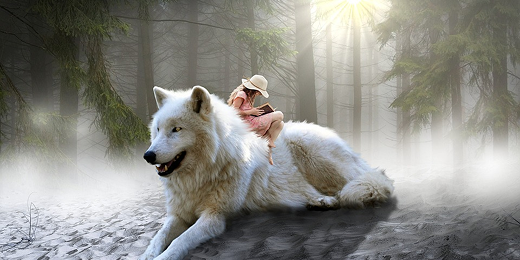
Wolf totem animal: balance between intuition, freedom, and loyalty
Do you feel a conflict between your thirst for freedom and your need for deep connection? The wolf totem animal embodies this delicate balance between independence and loyalty, offering an ancestral guide for your quest for meaning. In Native American traditions, it symbolizes wisdom and protection, while its dance beneath the moon reveals the cycles of your own inner evolution. Discover how its power awakens your intuition, liberates your authenticity, and bridges your shadow and light, your instinct and wisdom, on a journey toward balance and personal transformation .
The Call of the Wolf: Unravel the mysteries of this powerful totem animal
The profound meanings of the wolf totem animal
The strengths and challenges of the wolf spirit
Duality embodied: the meanings of the white wolf and the black wolf
How do you connect with your wolf totem animal?
Key takeaways about the wolf totem animal
The Call of the Wolf: Unravel the mysteries of this powerful totem animal
Do you hear a distant call in the dead of night? Does this primal cry resonate with a part of you searching for authenticity ?
The wolf totem embodies much more than an animal: it is an ancestral guide, a mirror of inner strength . Its energy blends wild freedom and ancestral wisdom, liberty and loyalty, solitude and solidarity.
Here you will discover his profound teachings : how he awakens dormant intuition, how he embodies the strength of unity in the diversity of the pack, and why his spiritual presence runs through Native American, Roman, and Asian myths.
Did you, like 83% of people connected to their spirit animal, feel an urgency to understand this link that transcends the human?
What message does this symbol hold in your life? Let yourself be guided towards an exploration where instinct and spirituality combine to reveal your deepest essence .
The profound meanings of the wolf totem animal
Intelligence and instinct, your inner compasses
The wolf embodies keen intelligence, combining instinct and reflection. It invites us to listen to our intuition, that inner voice often stifled by modern stress. Why neglect this innate wisdom? Its exceptional hearing and sense of smell symbolize the ability to perceive what escapes ordinary vision. Like the wolf, learn to discern hidden truths, to act with discernment, even in uncertainty. The moon, the wolf's ally, reminds us of the importance of following natural cycles to align your decisions with your deepest essence .
Freedom and independence, the call of your wild nature
The wolf lives free, without compromise. It embodies autonomy, but also the courage to forge one's own path, even if it involves moments of solitude. What price would you pay to live in harmony with your values? In Native American traditions, it guides us toward authenticity, a pillar of spiritual growth. However, unbalanced freedom can become isolation. The wolf teaches us to defend our personal space without denying essential connections . Are you ready to dare to be yourself, despite judgment?
Loyalty and connection, the strength of the pack
The pack is the wolf's strength. As a totem, it underscores the power of human relationships : family, friends, community. How do we cultivate bonds that nourish? In Roman mythology, the she-wolf suckling Romulus and Remus symbolizes unwavering protection. Yet, excessive mistrust can break these connections. Remember these lessons:
Intelligence and Instinct : Listen to your inner voice, your guide in decisions.
Freedom and Independence : Live authentically, but without neglecting the support of others.
Loyalty and Community : Protect your loved ones, because true strength lies in unity.
The wolf totem, embodying mystery and wisdom, is an ally for those seeking to reconcile individuality and solidarity. Heed its call to transform your challenges into strengths .
The strengths and challenges of the wolf spirit
The wolf's luminous qualities: your greatest strengths
The wolf embodies unwavering loyalty, forging strong bonds within its pack. This quality teaches you to be a steadfast support for those around you. Native Americans revere it as a spiritual guide, a symbol of integrity and protection for the group, reminding us of the importance of cultivating deep relationships .
Its collective hunting strategy reveals remarkable social intelligence. It combines instinct and reflection, like the Egyptian god Wepwawet, guardian of the paths. This duality of sharp mind and discernment helps you navigate challenges with foresight, resolving obstacles through a balance of intuition and logic .
Faced with life's storms, the wolf adapts its tactics with resilience. Despite historical persecution, it persists in diverse ecosystems. Its survival testifies to an inner strength to be cultivated, the strength to be reborn after hardship . Its connection to the moon reinforces its role as an initiator, inviting us to follow our intuition as a guide through the darker phases of our journey.
The Shadows of the Wolf: Challenges to Overcome
The need for personal space, while necessary, can become isolation. The lone wolf always finds its pack after its initiatory journey. This lesson reminds us to temper solitude, sometimes a source of growth, with social connection, which nourishes the soul .
Your cautious nature, while protective, can hinder new connections. European tales of the "big bad wolf" reveal this age-old mistrust. Learning to distinguish wise caution from irrational fear becomes an art to master, drawing on the teachings of Asian and Native American myths.
Your fierce independence, so precious for asserting your uniqueness, can become an obstacle to mutual support. Relying on others doesn't weaken, but rather strengthens, the collective. The wolf totem animal guides you toward a subtle balance between shadow and light, transforming isolation into shared strength , mistrust into discernment that flows smoothly with the lunar cycles.
Duality embodied: the meanings of the white wolf and the black wolf
The white wolf, a symbol of purity and spiritual awareness
The white wolf embodies spiritual awakening and connection to the universe, revealing the wisdom of lunar cycles and nature. This totem cultivates intuition, independence, and loyalty to oneself, all while living in harmony with the community. It reminds us that freedom arises from a balance between individuality and belonging , inviting us to embrace ancestral wisdom and illuminate our path, even in the darkness.
The black wolf, an exploration of shadow and raw instinct
The black wolf embodies the unconscious, inviting us to explore our fears, shadows, and repressed desires. This exploration reveals a hidden strength and personal truth. It symbolizes discernment in the face of negative energies, teaching us to set boundaries while remaining true to ourselves. Its presence whispers: "What you reject makes you weak, what you understand sets you free ."
Appearance
Symbolism of the White Wolf
Symbolism of the Black Wolf
Main energy
Light, purity, heightened consciousness
Shadow, mystery, unconscious
Spiritual Lesson
Spiritual awakening, connection to the divine
Introspection, acceptance of one's shadow side
Message for you
"Trust in your inner light and higher wisdom."
"Don't be afraid of your depths; that's where your greatest strength lies."
The black wolf and the white wolf form a duality essential to our evolution. Native American legend teaches that the wolf we feed becomes our reality. By integrating these energies, we access a balanced strength, guiding our autonomy and our truth .
How do you connect with your wolf totem animal?
Meditation and visualization to meet your guide
Meditation is a gateway to the energy of the wolf. Find a quiet place, ideally surrounded by nature, and let your mind wander to a mysterious forest under a silver moon. Imagine the wolf approaching, its piercing gaze meeting yours. What does it convey to you? Strength, intuition, or freedom ?
This moment of silent exchange can reveal buried answers. The wolf's energy amplifies self-confidence and illuminates forgotten paths. By connecting with its essence, you access ancestral wisdom, perfect for those seeking balance between their inner and outer lives.
Integrate the energy of the wolf into your daily life
To anchor the power of the wolf in your life , blend rituals and symbolic gestures. Each full moon, give yourself a moment of introspection by observing its silvery glow. This practice strengthens your connection with natural cycles and nourishes your intuition. And if you seek to deepen your understanding of spirit guides, explore your totem animal according to your astrological sign , which complements the teachings of the wolf.
Why limit yourself to rituals? Embrace symbolic objects, like a wolf pendant. These pieces of jewelry, true talismans, remind you of your strength and authenticity. For an even more personal connection, discover your spirit animal based on your first name —a unique way to align your path with your spiritual roots.
Meditate in nature : Visualize the wolf to receive its wisdom.
Observe the cycles of the moon : Use the energy of the full moon to strengthen your intuition.
Wear a symbol of the wolf : Use jewelry or objects to keep its strength and protection close to you.
The wolf is not just an animal: it is a mirror of your inner power. By integrating its teachings, you assert your place, protect your loved ones, and walk through life with confidence . Let its howl resonate within you, and dare to follow your instinct, even in the darkness.
Key takeaways about the wolf totem animal
The wolf totem is a powerful spiritual guide, teaching us to reconcile independence and belonging. It embodies the balance between solitude and communion, awakening inner strength, the courage to act according to our values, and the wisdom to overcome challenges. Its energy often arises during periods of transformation, inviting us to break free from social constraints and rediscover our freedom to be. Its pack symbolizes both the need for roots and the quest for freedom, connecting us to those who share our journey. It teaches that true power is born from the harmony between individuality and the collective , respecting our instincts while honoring human connections.
In short
The wolf is a guide to balance between individuality and community . Its pack represents both the need for connection and the thirst for autonomy, reminding us that unity does not negate uniqueness.
It encourages you to follow your intuition, let go of fears, and embody your truth . Associated with the moon, it guides you towards harmony with natural cycles, strengthening your connection to the living world.
Welcoming the wolf means accepting an inner metamorphosis, where limiting beliefs are shredded to reveal your free essence . This journey requires confronting your shadows to access a clearer light.
Embody the power of your spirit guide with our Wolf Totem Animal Bracelet , a symbol of protection and connection to your instincts . Wear it as a daily reminder of your connection with nature, cultivating a genuine relationship between freedom and true to yourself.
The wolf totem embodies strength and wisdom , combining intuition, freedom, and loyalty. It guides you toward balance between solitude and community, revealing your authenticity . Embrace its power with our [Wolf Totem Animal Bracelet](https://fauna-protect.com/products/bracelet-loup?srsltid=AfmBOor_brr6w3PoLhDYxNS6W2Tvpi6tyycXPciHauHo7GQCtM2XTNH4), a symbol of transformation and spiritual connection .
FAQ
What is the deeper meaning of the wolf totem?
The wolf totem resonates deeply with anyone on a journey of self-discovery. It embodies an ancestral strength, combining instinctive intelligence, bold freedom, and loyalty to loved ones. This spiritual guide invites us to listen to our intuition, cultivate our autonomy, and remain grounded in authentic connections. For a young woman seeking balance, the wolf is a mirror of our inner duality: wild and wise, solitary yet attached to its pack. It is a powerful reminder to assert ourselves without forgetting the importance of community .
What does the wolf represent as a totem animal?
As a totem animal, the wolf is a guide of transformation. It symbolizes the harmony between analytical thinking and intuition, independence and solidarity. Its spiritual presence encourages us to live in accordance with our deepest truths, to defend our values with courage, while remaining connected to those who are like us. For a woman seeking meaning, the wolf reveals the beauty of balance : daring to be oneself, without denying one's roots.
What profound values does the wolf embody?
The wolf is a symbol of rich, meaningful energy . It embodies strategic intelligence combined with keen instinct, the freedom to embrace one's uniqueness, and loyalty to those one cherishes. Spiritually, it teaches us to navigate between necessary solitude and nourishing connections. For a sensitive soul, these values become guiding lights: wisdom to discern, bravery to move forward, and unwavering love to direct one's path.
What symbols does the wolf embody in traditions?
The wolf is intrinsically linked to the Moon, a mirror of our unconscious and a source of intuition. In Native American cultures, it is a wise protector; in Roman mythology, a symbol of maternal protection. In Asia, it is a divine messenger. Its white coat evokes spiritual awakening, while the shadows of the black wolf confront our fears. Together, they form a perfect alchemy: that of recognizing our light and shadow to grow in authenticity.
Why is the wolf often considered a powerful totem?
The wolf proves particularly powerful because it embodies universal forces. Its resilience in the face of adversity, its ability to overcome trials, and its benevolent leadership make it a model of balance. Other totems, such as the eagle or the bear, possess unique powers, but the wolf imparts a rare teaching: the strength to assert oneself without dominating , to protect without smothering, to walk alone while remaining connected.
How is the wolf interpreted in psychoanalysis?
In the psychoanalytic world, the wolf embodies our inner conflicts. The "black wolf" represents unconscious fears, wounds to be healed, while the "white wolf" symbolizes the integration of these shadows to attain enlightened wisdom. Its appearance in dreams or visualizations can reveal blockages related to trust, loneliness, or the fear of abandonment. For those seeking healing, the wolf is a benevolent mirror reflecting our psychological evolution .
What are the personal challenges associated with the wolf spirit?
Like any spiritual guide, the wolf also reveals pitfalls to avoid. Its solitude can lead to isolation, its independence to stubbornness, and its innate distrust to emotional detachment. For a woman seeking harmony, these challenges become invitations: to cultivate authentic connections, accept help from others, and dare to trust the universe. The wolf teaches us that true strength lies in the balance between wildness and vulnerability .
What personality traits does the wolf reveal in us?
The wolf awakens essential qualities: loyalty to one's ideals, keen intuitive intelligence, and unwavering resilience. It also reveals our capacity to cooperate while maintaining our uniqueness. For a soul in transformation, these traits become allies : daring to defend one's dreams, listening to one's instinct in crucial choices, and cultivating a core of relationships where authenticity flourishes without compromise.
Which totem animal particularly embodies resilience?
The wolf is undoubtedly a totem of resilience. Its survival in hostile environments, its adaptation to the cycles of nature, and its perseverance in the face of challenges make it a universal role model. For a woman seeking renewal, it symbolizes the ability to weather storms and emerge stronger . Like the wolf, we learn to dance with change, to transform wounds into wisdom, and to howl at the moon to rediscover our inner voice.
![Tatouage Animal : Significations de 30 Totems + 200 Idées [Guide 2026]](http://fauna-protect.com/cdn/shop/articles/tatouage_animal_totem_significations_c5ed912b-f957-42a6-a868-8d594f8f8f6c.png?v=1761640759&width=533)
Animal Tattoos: Meanings of 30 Totems + 200 Ideas [2026 Guide]
In short? Choosing an animal tattoo is like giving yourself a personal totem . More than just a design, it embodies values (strength, freedom, metamorphosis) and guides your spiritual evolution . By exploring the 30 meanings presented, every woman can find a symbol aligned with her journey, transforming her skin into an inner identity card.
Your next animal tattoo could change your life.
Not just a decorative drawing, but a A spiritual guide engraved on your skin . A personal totem that embodies your inner strength, your transformation, your deepest essence.
Looking for an animal tattoo that resonates with your deepest self, beyond mere decorative motifs? Discover how to choose a symbolic companion from among 30 species with powerful meanings, from the courage of the lion to the metamorphosis of the butterfly, the wisdom of the owl, or the loyalty of the wolf. This 2026 guide unveils 200 unique ideas, blending modern styles (realism, geometric) with spiritual inspirations, to transform your skin into a canvas of sacred stories . Each design becomes a personal totem, etched eternally to reflect your inner transformation and deepest aspirations, between animal symbolism and spiritual journey.
Animal tattoos: much more than a drawing, a spiritual guide on your skin
How to choose the totem animal that suits you?
The ultimate guide to meanings: 30 animals decoded
Over 200 ideas for your animal tattoo: styles and trends for 2026
From idea to skin: the final crucial steps
Animal tattoos: much more than a drawing, a spiritual guide on your skin
What if your next tattoo became a reflection of your deepest essence? More than just a decorative motif, an animal tattoo embodies a quest for meaning, a mirror of the soul . For those seeking balance and self-connection, it's an act of personal transformation, a choice inspired by animal symbolism and its ancestral teachings. Each line drawn becomes a commitment to one's values, a way to carry positive and lasting energy with you.
Totem animals, revered in many cultures, act as spirit guides, silent allies etched onto the skin. The wolf, a symbol of loyalty and intuition, or the phoenix, an emblem of rebirth, are not chosen at random. Even the dove, bearer of peace and hope, or the elephant, an embodiment of wisdom and strength, resonate with universal meanings. Each creature embodies virtues—strength, resilience, freedom—that one wishes to integrate into one's life, becoming a symbolic companion to navigate one's path of awakening .
This guide explores the meaning of 30 iconic animals and offers 200 design ideas to help you choose. Before you begin, it's essential to understand your connection to the animal world. Discover your spirit animal based on your first name to align your tattoo with your inner essence . Because every line drawn on the body tells a unique story, an alliance between the human and the wild nature within. Far from a mere aesthetic whim, this choice becomes an anchor for your identity, a daily reminder of your deepest aspirations.
How to choose the totem animal that suits you?
To reflect on one's values and deepest aspirations
What quality do you wish to embody? The courage of the lion, the wisdom of the owl, or the transformative power of the snake? An animal tattoo can become a daily reminder of your goals. Ask yourself some essential questions: What character traits do you admire most? Which animal evokes your determination, creativity, or vulnerability? By reflecting on your personal values, you will find the animal that resonates with your inner self. It's an introspective journey toward aligning your choices with your true nature , a way to draw upon the teachings of animals to guide your growth.
The symbolism of animals by intention
To embody strength and protection , choose the bear, the wolf, or the lion. These guardians anchor your power, recalling the quiet strength of the hibernating bear or the unbreakable bond of the wolf pack. For freedom and independence, the eagle, the horse, or the butterfly take flight with grace. The horse's wild gallop evokes the freedom of the nomadic soul, while the eagle dominates the skies with a piercing gaze. The snake, the phoenix, or the butterfly symbolize transformation, ideal for marking a rebirth.
For family ties and loyalty, the elephant, the wolf, or the lioness embody fidelity. The elephant's exceptional memory reminds us of the importance of roots, while the wolf evokes pack solidarity. Your journey may intersect with the spiritual realm. Discover your totem animal according to your astrological sign for personalized guidance, a resonance between celestial cycles and your animal energy.
The influence of your personal history
The most powerful meaning remains the one that is personal to you. An animal might evoke a childhood memory, like a familiar cat or an eagle seen on a trip. It might also honor a departed loved one, whose spirit seems to manifest in animal form. This connection makes your tattoo unique, carrying a personal story .
By reconnecting with your past, you will reveal the animal that embodies your values and your evolution. Like that fox encountered during a solitary journey, a symbol of adaptability, or a dolphin spotted at sea, reflecting your need for harmony. Perhaps even a bird seen during a moment of doubt, which became a source of hope. The key is to listen to your intuition, guided by your story and your deepest emotions, to choose a unique tattoo that tells your truth .
The ultimate guide to meanings: 30 animals decoded
Each animal embodies a unique energy, a story to tell on the skin. Symbolism varies across cultures and eras, inviting personal reflection before getting inked. Discover interpretations that might inspire your next tattoo .
Majestic Predators: Strength and Instinct
Predators embody raw power , determination, and the symbiosis between strength and elegance. Their choice often reveals a connection to these primal energies .
Lion: A royal figure, it embodies courage, nobility, and protection . In ancient Egypt, it was venerated as a god of war, a symbol of justice and authority. In Roman culture, it symbolized the legendary strength of gladiators.
Wolf: Emblem of the pack, it symbolizes loyalty, instinct, and resilience . In Norse mythology, it embodies both destruction (Fenrir) and the force of nature. Its piercing gaze recalls the strength of the collective and independence.
Tiger: In China, it represents Yang, masculine energy, associating power, passion, and unpredictability. In India, it is linked to Shiva, the god of transformation, and embodies raw power.
Bear: A blend of power and wisdom, it evokes quiet courage and spirituality. In Native American traditions, it is a guide for healing and connecting with nature.
Panther: Mysterious and protective , she invites adventure and new beginnings. In Africa, she is revered as a guardian of secrets and a symbol of wild femininity.
Fox: Between cunning and wisdom , it is a messenger of spirits among the Celts. In Asia, the Japanese kitsune embodies cunning and longevity. Its strategic intelligence appeals to adaptable minds.
Messengers from Heaven: Freedom and Spirituality
Birds and winged creatures evoke the elevation of the soul, the quest for freedom, or connection to the divine. Their meanings oscillate between hope and mystery .
Eagle: Visionary and free, it embodies spiritual authority . In Christianity, it symbolizes resurrection. Its piercing gaze recalls the ability to overcome obstacles, often chosen by leaders.
Owl : In the West, a symbol of wisdom and intuition, it shifted towards fear in ancient China, linked to an excess of Yang. For the Greeks, it was associated with Athena, goddess of reason.
Raven : Bearer of magic and transformation, it embodies intelligence and the journey from darkness to light. Among the indigenous peoples of North America, it is the trickster who created the world.
Dove: A universal ambassador of peace , it evokes love, hope, and purity. In Christianity, it represents the Holy Spirit and redemption.
Hummingbird: Lightness and vitality intertwine in its fluttering wings. It symbolizes the joy of life and balance . For the Aztecs, warriors who died in battle were reincarnated as hummingbirds.
Phoenix : Absolute renewal, it celebrates resurrection and strength after hardship. In Egypt, it was linked to the god Ra, master of the sun and eternity.
The duality of the serpent :
Life, healing and rebirth (the caduceus of physicians).
Death, danger and temptation (the biblical story of the Garden of Eden).
Transformation and shedding of skin (rejection of the old self).
Esoteric wisdom and hidden knowledge .
Creatures of the Earth and Waters: Wisdom and Transformation
Between earthly roots and aquatic fluidity, these animals embody natural cycles, perseverance, and the deep roots of the soul .
The serpent: Beyond its dualities, it symbolizes metamorphosis, healing, and the eternal cycle of life . In Mesoamerica, Quetzalcoatl, the winged serpent, embodies wisdom and creation.
Turtle : Patience incarnate, it evokes stability, longevity, and protection thanks to its ancient shell. In Hinduism, it supports the world on its shell, a cosmic symbol.
Elephant: A symbol of quiet strength and legendary memory, it represents wisdom, good fortune, and unbreakable family ties . In Asia, it is associated with Ganesha, the god of wisdom and abundance.
Koi carp : In Japan, it embodies courage and luck, climbing rapids to achieve fulfillment. Its journey against the current inspires personal struggles.
Dragon : A mythical guardian, it embodies power, protection, and wisdom, balancing Yin and Yang in Eastern cultures. In Europe, it represents a challenge to overcome, a symbol of the triumph of good.
The stag: Its regrowing antlers symbolize regeneration and nobility . In Zoroastrianism, it embodies the triumph of good. For the Celts, it is the animal of kings and druids.
The fascinating world of other creatures
The animal world extends far beyond iconic figures. Each creature brings its own set of meanings, sometimes unexpected .
Butterfly: The ultimate metamorphosis , it marks a new chapter in life, often chosen after a major change. In Mesoamerica, it is the spirit of the ancestors, a symbol of resurrection.
Spider/Scorpion : Linked to patience and destiny, they evoke fierce defense and creativity (the woven web). Anansi, the storytelling spider of West Africa, embodies intelligence and humor.
Dog: Unwavering loyalty ; it is the guardian of eternal friendships and protective bonds. In Greek mythology, Cerberus presides over the underworld, guardian of the gates between the worlds.
Cat: Mystery and independence mingle in its piercing eyes. In Egypt, it was sacred, linked to Bastet, protector of the home and femininity.
Horse: Freedom and endurance will guide adventurous hearts. In Central Asia, it is a symbol of power and spiritual conquest , linked to shamans.
Cheetah: Grace and speed for those who defy limits. In ancient Egypt, it was associated with the goddess Mut, protector of the pharaoh.
Octopus: Adaptability and intelligence , mistress of the abyss where mysteries lie hidden. In Japan, it symbolizes the strong woman in old erotic prints.
Shark: Brute force and oceanic mystery , it reminds us of the importance of intuition. For Polynesians, it is a guardian spirit, tattooed to protect sailors.
Giraffe : Elegance and perspicacity, inviting us to see further thanks to its long neck. In Africa, it embodies grace in adversity.
Seahorse: A hybrid creature between a horse and a fish , a symbol of balance between two worlds. In Greek mythology, it pulled the chariot of Poseidon, master of the seas.
Lamb : Innocence and purity, a choice for a blank page or spiritual renewal. In Christianity, it represents sacrifice and redemption.
Animal
Key keywords of symbolism
Ideal for...
Wolf
Loyalty, Instinct, Freedom, Community
Celebrating family or friendly ties.
Butterfly
Transformation, New Beginning, Beauty
To mark a significant life change.
Snake
Renaissance, Healing, Wisdom
To symbolize healing or personal growth.
Lion
Courage, Strength, Royalty, Protection
To assert one's inner strength and leadership.
Tortoise
Patience, Longevity, Stability
Remember to take your time and build on solid foundations.
Eagle
Vision, Freedom, Perspective
Gaining clarity and rising above difficulties.
To each their own design: choosing a tattoo artist
A tattoo is an intimate work of art, requiring a professional sensitive to your vision . An experienced artist will master the cultural and technical nuances for a precise result. For example, a stylized Asian dragon differs from a European dragon in its motifs and expressions. Take the time to browse their portfolio, verify their sterilization practices, and check their reputation. Your skin deserves a storyteller.
Evolution of trends: from old to modern
Animal tattoos transcend eras . Polynesian motifs, like the shark or the dolphin, tell stories of family lineages through geometric patterns. Recent styles blend watercolor and realism, with floral backgrounds for fluid designs. Minimalism appeals to those who prefer subtle motifs, such as a small snake rendered in a simple line. Hybrids, combining animal and natural elements, reflect a modern spirituality, like a phoenix surrounded by waves.
Your spirit animal: a reflection of yourself
Fauna's totem animal test invites you to discover your personal animal guide. A wolf for protectors, a butterfly for those who have transformed, an eagle for visionaries. This guide doesn't replace general interpretation, but it nourishes the search for meaning . Your tattoo, if it resonates with this connection, becomes a living talisman, unique to your journey.
Over 200 ideas for your animal tattoo: styles and trends for 2026
Popular styles to enhance your pet
Realism is essential to capture the raw essence of an animal , with striking details of fur, feathers or scales, ideal for a proud wolf or a majestic eagle.
Watercolor, on the other hand, invites reverie. Delicate hues blended like butterfly wings or a hummingbird in motion, for a fluid and ephemeral aesthetic .
The geometric style combines nature and structure. A stylized lion with perfect angles or a phoenix incorporating symbolic triangles, for a tattoo that is both modern and spiritual .
Opt for minimalism if you prefer discretion. A turtle silhouette or a panther paw in a thin line, for a subtle reminder of your inner strength .
Finally, the choice of colors or black and white plays on emotion . A snake in shades of blue evokes mystery, while pure black reinforces the timelessness of a raven.
Ideas for compositions and placements
A wolf surrounded by flowering branches, symbolizing the fusion between instinct and renewal .
The silhouette of a bear integrated into a mountainous landscape in double exposure, to embody solidity and connection to the earth .
A family scene : a lioness and her cubs on her shoulder, a reminder of protection and maternal tenderness.
A fox broken down into triangular shapes , for an abstract design blending playfulness and mystery.
A dolphin hybrid between a bird and a sea wave , on the leg, evoking freedom and fluidity.
The placement influences the impact : a snake coiling around the arm, an eagle spreading its wings on the back, or an enigmatic owl on the thigh. Each choice tells a unique story.
The evolution of trends for 2026
Abstract tattoos are gaining popularity, prioritizing emotion over the accuracy of the design . A stylized cat in fluid curves, without outlines, for a dreamlike effect.
Micro-realism is asserting itself, capturing minute details: the whiskers of a cat or the texture of a koi carp scale, for discreet works that are rich in meaning .
Art Nouveau inspired a revival of elaborate motifs . A seahorse with plant-like lines, or a peacock blending feathers and arabesques, for a vintage and symbolic aesthetic.
In 2026, animal tattooing becomes an alliance between tradition and innovation , where each line reflects a quest for meaning and personal harmony.
From idea to skin: the final crucial steps
The importance of personal meaning
Each symbol etched onto the skin tells a unique story. Personal meaning takes precedence over collective interpretations . An animal tattoo is a mirror of your journey, an intimate language between you and your inner self. Take the time to reflect: a hasty decision can lead to a meaningless symbol. Which animal resonates with your struggles, your dreams, your essence? Beyond cultural symbolism, it is your intuition that should guide the choice. This profound connection transforms a simple motif into a living talisman.
Choosing the right tattoo artist
Choosing the right artist is crucial. Look for an artist whose style aligns with your vision. Explore portfolios on Instagram or in a studio, check client reviews, and verify hygiene standards. In France, the artist must have completed certified training and adhere to the regulations of the Regional Health Agency (ARS). An experienced professional will bring your idea to life. Ask them key questions: "Have you tattooed this type of animal before?" or "How do you adapt designs to body shapes?" This collaboration guarantees a masterpiece that truly reflects you .
Prepare your tattoo project
Careful preparation ensures a smooth experience. Here is your pre-appointment checklist :
Gather reference images (tattoos, sketches, photos) to clarify your vision.
Define the location and approximate size on your body.
Avoid alcohol 24 hours beforehand to limit bleeding .
On the day of the procedure, arrive rested, hydrated and nourished for better pain tolerance .
Your animal tattoo is ready to become part of your story. Wear it like a talisman, a reminder of your strength and your transformations. A well-planned tattoo project is a step towards self-expression . 🌿
Your animal tattoo is a personal totem and spiritual guide etched onto your skin. By drawing on its profound symbolism, you embody courage, transformation, or freedom . Whether it's rooted in history or your own journey, let it become a symbolic companion, a vibrant reminder of who you are . Wear it with pride.
FAQ
Which animal should you choose for a tattoo that reflects your personality?
Choosing your spirit animal is a deeply spiritual step. It's about reflecting your core values: the wolf embodies loyalty and harmony with your pack, the elephant symbolizes wisdom and family ties, while the snake celebrates metamorphosis. As a first step in introspection, you can discover your spirit animal based on your first name , a gateway to your inner guide.
What deep symbolism does an animal tattoo hold?
An animal tattoo is never insignificant: it becomes a reflection of an ideal or a quest. The lion evokes courage and royalty, the butterfly celebrates rebirth after hardship, and the owl embodies hidden wisdom. Each creature carries a universal energy, but it is your personal interpretation that brings its symbol to life , resonating with your unique journey.
Which animal symbolizes family ties in a tattoo?
To honor love and loyalty, certain animals stand out: the elephant, revered for its close-knit matriarchy; the wolf, guardian of the pack; and the lioness, protector of her family. These motifs become visual reminders of the importance of roots , to be immortalized in gentle compositions such as a family of elephants or a pack on the move.
What are the universal symbols for totem animals?
Symbolism varies across cultures, but certain archetypes transcend time. The dragon represents the balance between strength and wisdom (Yin and Yang), the snake embodies the duality of life, death, and transformation, while the phoenix is the emblem of rebirth from the ashes. These universal narratives intertwine with your story to create a tattoo imbued with meaning .
Where should you avoid getting a tattoo to preserve your balance?
For a smooth experience, choose areas with stable, low-stress skin. Joints (wrists, knees) or palms, which are often in motion, can blur the design. Opt instead for symbolic and peaceful spaces: the back, reflecting your vital energy, or the ankle, an anchor between earth and sky. Remember, every tattoo is a dialogue with yourself : let your energy guide you.
Which animal embodies inner strength?
To embody resilience, the lion reigns supreme, a symbol of nobility and protection. The bear, an ally of deep introspection, symbolizes quiet strength, while the koi carp reminds us that we can swim against life's currents with perseverance. These motifs adapt to a variety of styles, from graphic realism to fluid watercolor, allowing you to express your strength in your own unique way .
Which animal embodies the essence of life?
Life, in all its complexity, finds its echo in creatures like the dragon, guardian of vital energy, or the tortoise, an allegory of ancestral wisdom and longevity. The snake, linked to the eternal cycle of shedding its skin, reminds us that birth and renewal are inseparable. These symbols become visual mantras, etched onto the skin to celebrate the ephemeral and the eternal .
Where should you place your animal tattoo for a spiritual impact?
The placement amplifies the message: the back features a spread eagle, symbolizing a lofty vision, while the forearm showcases a stylized wolf, a constant connection to one's instincts. The 2026 trends favor minimalist tattoos on the wrist, or floral motifs (owl and lily, snake and peonies) for a balance between nature and transformation. Let your intuition guide your choice , choosing the location where the animal resonates most deeply.
Which animal embodies the quest for happiness?
Happiness lies in the details : the hummingbird, messenger of vitality and harmony; the fox, cunning joy and free spirit; or the dove, universal peace and hope. These delicate creatures lend themselves to minimalist or colorful designs, a reminder that happiness is as much in the journey as in the destination. A tattoo that smiles at life, to be worn with lightness.

Discover your spirit animal according to your astrological sign
The key takeaway: Your astrological sign reveals a totem animal , a mirror of your essence and a spiritual guide. These ancestral connections, inspired by indigenous traditions, offer keys to cultivating your strengths and moving towards harmony . Thus, the Falcon (Aries) embodies boldness, while the Wolf (Pisces) symbolizes deep intuition, inviting you to carry their energy like an inner compass.
Do you sometimes feel lost, as if the universe is whispering messages to you through signs you struggle to decipher? Explore the connection between your astrological animal sign and your inner self, where celestial energies and ancestral wisdom blend to light your path. Discover how the Aries Falcon embodies boldness and vision, or how the Virgo Bear symbolizes quiet strength and sharp instinct. This guide reveals these spiritual allies, true reflections of your personality and your challenges, to reconnect you with your essence and cultivate a balance between your heart, your mind, and the nature that surrounds you.
What is your spirit animal according to your astrological sign?
The Origins of the Zodiac and Spirit Animal Connection
The detailed guide to your spirit animal according to your sign
How to find your spirit animal beyond astrology?
Integrate the energy of your spirit animal into your daily life
A symbolic journey to the heart of yourself
What is your spirit animal according to your astrological sign?
Are you searching for meaning, a deep connection with your inner being and the nature that surrounds you? The universe sometimes offers us subtle guides, symbols that resonate with our soul. Among them, totem animals, true mirrors of our essence , can illuminate our personal path.
The spirit animal is much more than just an animal: it embodies a spiritual guide who chooses you, reflecting your deep traits , your temperament and your energies. It is a protective presence, an ally who accompanies you in your quest for fulfillment and wisdom, in harmony with the rhythm of your emotions and your aspirations.
By associating your astrological sign with a spirit animal, astrology offers a symbolic key to better understanding yourself. This correspondence, derived from ancient traditions, is not an exact science but a tool for self-knowledge . Explore the varied interpretations and discover which animal embodies your unique energy, to move towards your inner truth.
The Origins of the Zodiac and Spirit Animal Connection
The roots of the association between totem animals and astrological signs are rooted in the shamanic and spiritual traditions of indigenous peoples. These cultures perceive animals as sacred guides, revealing universal teachings linked to the cycles of nature and human emotions.
In Native American culture, every being is linked to a spirit animal from birth. This guide, chosen by the individual before incarnation, embodies specific energies to illuminate their path. These bonds are not based on astronomical calculations, but on an intuitive connection between the soul and the animal kingdom.
The association of a totem animal with your astrological sign is an invitation to explore the facets of your personality through the mirror of nature and its ancestral wisdom.
Interpretations vary depending on the tradition. Some systems that associate zodiac signs and totem animals, such as those of Native American nations, propose symbolic correspondences . Sagittarius can thus be linked to the Elk or the Owl depending on the source.
These associations do not claim to be universal truth. They offer keys to reflection to better understand one's strengths and weaknesses. The key lies in the intimate resonance felt by each person with their guide animal, whether it comes from astrology, shamanism, or an intense personal experience.
Astrological Sign
Dates
Totem Animal
Key Features
Ram
March 21 - April 19
Falcon
Fearless, Passionate, Independent
Bull
April 20 - May 20
Beaver
Builder, Reliable, Organized
Gemini
May 21 - June 20
Deer
Sociable, Curious, Elegant
Cancer
June 21 - July 22
Green Woodpecker
Protective, Emotional, Nurturing
Lion
July 23 - August 22
Salmon
Generous, Confident, Brilliant
Virgin
August 23 - September 22
Bear
Cautious, Analytical, Instinctive
Balance
September 23 - October 22
Crow
Diplomatic, Sociable, Harmonious
Scorpio
October 23 - November 21
Snake
Intense, Transformative, Passionate
Sagittarius
November 22 - December 21
Owl
Wise, Clairvoyant, Spiritual
Capricorn
December 22 - January 19
Goose
Determined, Enduring, Ambitious
Aquarius
January 20 - February 18
Otter
Innovative, Independent, Playful
Pisces
February 19 - March 20
Wolf
Intuitive, Faithful, Spiritual
Discover your astrological totem animal .
The detailed guide to your spirit animal according to your sign
Aries March 21 April 19: The Falcon, the Intrepid Spirit
The falcon embodies the airy spirit of Aries . Its piercing gaze symbolizes the ability to set clear goals. The speed of its flight reflects the impulsive and passionate energy typical of this fire sign.
As a totem, the falcon teaches the art of seizing opportunities with confidence . It guides Aries in their quest for adventure, reminding them that careful observation always precedes decisive action.
Red tulips and honeysuckle accompany this totem. These symbols of confidence and courage reinforce the adventurous nature of Aries , encouraging them to move forward boldly in their personal quest.
Taurus April 20 May 20: The Beaver, the Patient Builder
The Beaver represents the quiet strength of Taurus . Its hardworking and resourceful nature resonates with the practical and organized qualities of this earth sign rooted in the concrete.
This spirit animal embodies perseverance. It teaches Taurus to build solid foundations in all aspects of life , whether in their home, career, or personal relationships.
Roses and lilies accompany this totem. These flowers of patience and reliability reinforce Taurus' core values : stability, family protection, and success through hard work.
Gemini May 21-June 20: the deer, the sociable soul
The Stag embodies the communicative grace of Gemini . Its elegance and sociability reflect the curious, adaptable, and expressive spirit of this air sign, always on the move.
This totem animal guides Gemini towards fluid and caring communication . Its agility symbolizes the ability to adapt to situations while maintaining authenticity.
In some traditions, the Dolphin complements this totem. This marine symbol of joy and communication reinforces the social and playful qualities of Gemini , accompanying him in his human interactions.
Lavender and lilac surround this totem. These flowers of intelligence and curiosity support the emotional balance of Gemini, nourishing their quest for new knowledge .
Cancer June 21 July 22: the green woodpecker, the nourishing heart
The Green Woodpecker represents Cancer's joie de vivre . Its joyful song and protective nature resonate with the sensitive and caring soul of this deeply family-oriented water sign.
This spirit animal guides Cancerians toward daily wonder. It teaches them to preserve their cocoon while letting in the light and music of life.
White roses and daisies surround this totem. These flowers of tenderness and sensitivity strengthen the caring nature of Cancer, awakening its natural gentleness .
Leo July 23 August 22: Salmon, generous strength
The Salmon embodies the generous vitality of Leo. Its ascent against the current symbolizes the creative force of this fire sign , always on the move to enlighten those around it.
This totem animal guides Leos towards confidence in their journey. It teaches them to share their light without losing themselves, to keep faith in their mission despite the challenges .
The Sturgeon can complement this totem. This ancient fish symbolizes wisdom and leadership, strengthening the natural qualities of Leo : charisma, optimism, and radiance.
Sunflowers and dahlias accompany this totem. These flowers of creativity and confidence support the Leo's artistic expression and magnify his radiant energy .
Virgo August 23 September 22: the bear, the quiet strength
The Bear embodies the gentle power of Virgo . Its brute strength tempered by wisdom resonates with the balance between analysis and intuition specific to this earth sign.
This totem animal guides Virgos towards instinctive confidence . It reminds them to trust their inner knowing, to use their pragmatism as a tool for personal growth.
Chrysanthemums and pansies surround this totem. These flowers of attention to detail and modesty strengthen the helpful nature of Virgo, awakening her practical wisdom .
Libra September 23 October 22: The Raven, the Messenger of Harmony
The Raven embodies Libra's diplomatic intelligence . Its graceful flight and sociable nature resonate with the balanced and harmonious spirit of this air sign.
This totem animal guides Libras towards compassionate communication. It teaches them to be peacemakers in conflicts, to use the strength of the collective to create balance .
Roses and hydrangeas accompany this totem. These flowers of beauty and balance strengthen Libra's sense of justice and awaken their power of reconciliation.
Scorpio October 23 November 21: the snake, the symbol of transformation
The Snake embodies the metamorphosis of Scorpio. Its abandonment of molt symbolizes the capacity of this water sign to renew itself deeply, to transform its life with intensity .
This totem animal guides Scorpios towards awakening their powerful energy . It teaches them to master their passions, to use their strength to regenerate themselves and help others.
Black roses and hibiscus surround this totem. These flowers of depth and intensity support the Scorpio's inner explorations, magnifying its inner power .
Sagittarius November 22 December 21: the owl, the wise visionary
The Owl embodies the clairvoyance of Sagittarius . Its penetrating gaze in the darkness resonates with the adventurous and spiritual spirit of this fire sign in search of truth.
This totem animal guides Sagittarians towards sharp intuition. It teaches them to see beyond appearances, to cultivate their inner wisdom to light their path .
The Elk can complement this totem. This symbol of the great plains reinforces the spirit of independence and exploration of Sagittarius , encouraging his quest for freedom and authenticity.
Dandelions and carnations accompany this totem. These flowers of optimism and travel strengthen the adventurous soul of Sagittarius, awakening his thirst for discovery .
Capricorn December 22 January 19: the goose, the ambitious soul
The Goose embodies Capricorn's ambition. Its formation flight reflects this earth sign's ability to pursue its goals with determination and mutual support .
This totem animal guides Capricorns towards patience and perseverance. It teaches them to plan their ascension wisely , to cultivate stability in their path.
The Snowy Owl can complement this totem. This symbol of winter cold reinforces the qualities of wisdom and discipline of Capricorn , awakens his methodical spirit.
Carnations and irises accompany this totem. These flowers of ambition and stability support Capricorn's long-term projects and magnify his endurance.
Aquarius January 20 - February 18: The Otter, the free and innovative spirit
The Otter embodies the creativity of Aquarius . Its balance between water and earth reflects the innovative and balanced nature of this air sign, always in search of originality.
This totem animal guides Aquarius towards the free expression of their individuality . It teaches them to use their freedom to inspire, to share their vision with kindness.
Orchids and birds of paradise accompany this totem. These flowers of innovation and individuality strengthen the visionary spirit of Aquarius, awakening its originality .
Pisces February 19 - March 20: The Wolf, the Intuitive Soul
The Wolf embodies the intuition of Pisces . Its connection to the spiritual world resonates with the sensitive and imaginative soul of this water sign in perpetual resonance with the invisible.
This spirit animal guides Pisces toward a balance between solitude and belonging . It teaches them to trust their instincts and explore their inner world with kindness.
Water lilies and poppies accompany this totem. These flowers of reverie and sensitivity strengthen Pisces' empathy and awaken their artistic and dreamy nature .
How to find your spirit animal beyond astrology?
While astrology associates a spirit animal with each sign, the true connection is revealed through an intimate quest . Could your spirit guide be different from the one linked to your sign? This question opens a path guided by repeated signs in your daily life.
Several methods from shamanism and personal development shed light on this journey:
Intuition and Feeling : An animal that triggers immediate attraction or spontaneous fascination could be your totem. Trust these emotions, a sign of a deep connection with your essence.
Recurring dreams : An animal that regularly appears in your dreams acts as a messenger from your subconscious. These nighttime visions reveal symbolic messages related to your journey.
Encounters in nature : Unexpected appearances in the forest or repeated symbols (jewelry, image) attract your attention. Interpret their presence: a butterfly encountered several times suggests a transformation in progress.
Meditation : Guided visualization, using sounds such as shamanic drumming, can reveal your totem. This practice relies on listening to your inner guidance.
No method is universal. The key is to welcome the opening. Your spirit animal reveals itself when you are aligned, whether it's a hawk in your dream or a wolf felt as a mirror of your being. Explore these paths, and let the universe guide you.
Integrate the energy of your spirit animal into your daily life
Knowing your spirit animal is a gateway to self, but transformation lies in action . Let its energy guide you to cultivate specific qualities in your life. This connection supports your personal growth and informs your daily choices. For example, if your spirit animal is the Falcon (Aries), focus on its keen vision to seize opportunities without hesitation.
Study your animal : Explore its behaviors and strengths through documentaries or traditions. The Beaver (Taurus) embodies perseverance, while the Wolf (Pisces) symbolizes loyalty.
Meditate on its qualities : Visualize your totem to integrate its traits. The courage of the Falcon or the intuition of the Owl (Sagittarius) become concrete allies in your challenges.
Use visual aids : Create a sacred space with a statue or photo of your pet. A white candle and incense strengthen your connection.
Wear a symbolic piece of jewelry : A totem-shaped pendant made of natural materials becomes a daily talisman. Labradorite amplifies intuition, while amber strengthens adaptability.
Your spirit animal is not just a label, but a powerful ally on your path, an inexhaustible source of strength and inspiration to become the best version of yourself.
Think of your totem as a companion. During challenges, it teaches you about metamorphosis or clear vision. By welcoming it, you activate a dialogue between your soul and the wisdom of nature. Every action you take in connection with its energy strengthens your inner alignment and illuminates your quest for meaning .
A symbolic journey to the heart of yourself
Exploring your totem animal linked to your astrological sign gives you the keys to decoding your deepest traits, aspirations, and challenges. Each creature, whether a bold Falcon or an intuitive Wolf, embodies an energy to cultivate in order to move toward balance and authenticity. This symbolic link is not a fixed truth, but an open door to introspection and inner awakening .
Trust in the wisdom of your animal guide. Let it enlighten your choices, calm your doubts, or amplify your strengths. Perhaps the Raven will whisper hidden truths to you? Or will the Snake guide you toward a necessary metamorphosis? Your spirit animal is just waiting for you to listen and reveal its light . What path opens up to you, once you welcome it?
Your spirit animal, a mirror of your essence, is a symbolic key to personal fulfillment . Welcome its teachings with kindness: each encounter with your guide reveals a facet of your inner strength . Let this wisdom guide your path of spiritual growth and balance .
FAQ
How do I find out my spirit animal linked to my astrological sign?
If you feel the call of harmony between your being and nature, your astrological sign can be the key that opens the door to your spirit animal . Each zodiac sign is linked to an animal that embodies its unique energies. Aries vibrates with the Falcon, symbol of insight, while Taurus connects with the Beaver, master of perseverance. Gemini dances with the Elegance of the Stag, and Cancer sings in harmony with the Green Woodpecker. Your spirit animal is there to guide you , reflecting your strengths and challenges.
As you explore this connection between the stars and the animal kingdom, you may discover the powerful soul of the Wolf for Pisces, the wisdom of the Owl for Sagittarians, or the determination of the Goose for Capricorns. It's a journey of discovery where your sign becomes the arch that leads you to your spirit guide .
Is my spirit animal hidden in my date of birth?
There's a magic in your birth date that can reveal your spirit animal . According to ancient wisdom, each time of year resonates with a particular animal spirit. From March 21 to April 19, the Falcon watches over Aries. The Beaver accompanies souls born between April 20 and May 20, while the Stag dances with those born from May 21 to June 20.
Birthdates form a kind of star map that can guide us toward our spirit animal. The Woodpecker protects those born between June 21 and July 22, and the Salmon illuminates the period from July 23 to August 22. This connection between your birthdate and your spirit animal is an invitation to explore your innermost being through the mirror of nature.
What are the sacred animals that guide each zodiac sign?
The Western zodiac and animal wisdom are woven into a vibrant spiritual tapestry of meaning. Discover your celestial companions :
Aries (March 21 - April 19) : Falcon - Visionary and courageous
Taurus (April 20 - May 20) : Beaver - Builder and Perseverant
Gemini (May 21 - June 20) : Deer - Light and adaptable
Cancer (June 21 - July 22) : Green Woodpecker - Joyful and protective
Leo (July 23 - August 22) : Salmon - Generous and resilient
Virgo (August 23 - September 22) : Bear - Powerful and intuitive
Libra (September 23 - October 22) : Raven - Diplomatic and wise
Scorpio (October 23 - November 21) : Snake - Transformative and intense
Sagittarius (November 22 - December 21) : Owl - Visionary and free
Capricorn (December 22 - January 19) : Goose - Persevering and loyal
Aquarius (January 20 - February 18) : Otter - Innovative and free-spirited
Pisces (February 19 - March 20) : Wolf - Intuitive and loyal
What is the spiritual essence of the Libra spirit animal?
Dear Libra, your spirit animal, the Raven, is a powerful guide for your soul in search of harmony . This celestial messenger embodies your sociable nature, your natural elegance, and your thirst for balance. Like you, it knows how to navigate between worlds, bringing peace and understanding where storms reign.
This intelligent bird teaches you the power of dialogue and the beauty of diplomacy. It encourages you to use your gift as an orator to build bridges between hearts and cultivate balanced relationships. The Raven reminds you that your quest for harmony is not just a personal pursuit, but a gift to be shared with the world. When you feel lost, remember that your spirit animal teaches you that true balance begins within .
What paths lead to the revelation of my totem animal?
Dear seeker of meaning, several mysterious paths can lead to the encounter with your spirit animal. Intuition is your compass : an animal that has fascinated you since childhood, that marks you with its repeated presence, or that haunts your dreams. Perhaps it's a glimpse of nature, a shudder at the sight of it, an inexplicable feeling of belonging.
Meditation is an open door: in the silence of your heart, ask your spirit guide to reveal themselves. Your dreams can also be messengers—a regularly recurring animal could be your ally. Finally, your astrological sign offers a clue: by exploring the energies of the animals associated with your birth period, you may feel a deep resonance. Remember, your spirit animal chooses you as much as you choose it.
Does my birth month open the wings of my spirit animal?
The rhythm of the seasons reveals clues to your spirit guide . March to April, a time of renewal, resonates with the Falcon - messenger of spring and life energy. May to June, the season of buds, vibrates with the Beaver and the Stag - builders and dancers of life.
July to September, the ripening period of flowers, whispers the secrets of the Green Woodpecker, the Salmon, and the Bear—protectors and explorers of the depths. October to December, the harvest season, evokes the wisdom of the Raven, the Snake, and the Owl—guardians of the mysteries of the soul. The winter months, January to February, finally speak through the Goose and the Otter—travelers of cold waters and the free spirit. Your birth month is a clue, but the key is the resonance you feel with the animal .
Is there an astrological sign that is more secretive than the others?
Dear Symbol Explorer, the question of the rarest sign is intriguing. According to birth statistics, more babies are born in summer, making the signs of that time (Cancer, Leo, Virgo) more common. Winter sees fewer births, which would make the winter signs (Capricorn, Aquarius, Pisces) statistically rarer .
In your quest for balance and meaning, it is more valuable to understand that each sign, each spirit animal, is unique like each snowflake. What matters is not its frequency, but its resonance with your soul. Perhaps your spirit animal, rare or not, is a perfect mirror of your uniqueness. Remember that what really matters is the deep connection you feel with your guide , not its frequency in the world.
When a spirit animal crosses my path, what does it reveal?
When a spirit animal enters your life, it reveals a sacred message. This animal isn't there by chance—it acts as a mirror to your essence, a guide for your evolution . If the Falcon crosses your path, perhaps it's a call to look up to the horizon of your dreams. The Beaver could be a reminder to build solid foundations for your happiness.
Your spirit animal may appear in moments of crucial decision-making, like a beacon in a storm. It may take the form of a visitor in your dreams, a repeated presence in your daily life, or an inexplicable attraction to a being from the animal kingdom. It is an invitation to explore the qualities that this animal embodies, to cultivate them within yourself to move forward in your quest for balance and inner truth .
What are the signs that reveal my animal sign?
Dear spiritual traveler, your spirit animal reveals itself through subtle signs that dance throughout your daily life. Perhaps this animal regularly appears in your environment, appearing at significant moments in your life. Or perhaps it's a recurring dream in which the animal presents itself to you with its teachings.
Sometimes it's an irresistible attraction to a particular animal, a calling you've felt since childhood. Other times, it's perfect synchronicity: you think of an animal and it immediately appears, like a wink from the universe. Your spirit animal makes itself felt through a deep resonance, an echo that resonates within you, telling you, "I am your guide." It's this inner connection, this resonance of the heart, that reveals your sacred animal .